Try our free, interactive chart of the Presidents of the United States. Mouse over a president to view details, click on a president for a full summary.
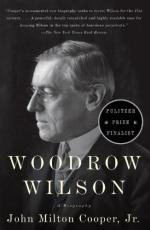
Dr. Thomas Woodrow Wilson ( 28 December 1856 - 3 February 1924 ) was the 45th state Governor of New Jersey (1911-1913) and later the 28th President of the United States (1913-1921). He was the second Democrat to serve two consecutive terms in the White...
Woodrow Wilson, the historian and political scientist, will always be eclipsed by Wilson, the president of Princeton University, the governor of New Jersey, and the twenty-eighth president of the United States. Had he not attained, from 1902 to 1920,...
Thomas Woodrow Wilson (1856-1924), twenty-eighth president of the United States, led the country into World War I and was a primary architect of the League of Nations. Woodrow Wilson was born in Staunton, Va., on Dec. 28, 1856. His father, a...
(b. December 28, 1856; d. February 3, 1924) Twenty-eighth president of the United States (1913–1921); presidency marked by substantial use of military, president during World War I; enunciated Fourteen Points as American war aims and helped...
Woodrow Wilson was widely admired as a writer, a scholar, and an educator more than two decades before he became president. His first book, Congressional Government (1885), criticized the influence of Congress and argued that the president—as the...
Thomas Woodrow Wilson (December 28, 1856–February 3, 1924), was the twenty-eighth President of the United States. A devout Presbyterian and leading "intellectual" of the Progressive Era, he served as president of Princeton University then became the...
Woodrow Wilson. By John A. Thompson. Profiles in Power. (New York and other cities: Longman, 2002. Pp. [xviii ], 265. Paper, $15.95, ISBN 0-582-24737-3.) The world has long been fascinated and baffled by Woodrow Wilson. Recognizing his importance to presidential leadership within the...
THIS biography does not alter one's impression of Woodrow Wilson as a figure by turns noble and ridiculous, another of history's heroic failures. Wilson, the standard verdict goes, could not accept the world on its own distasteful terms and therefore was taken in by...
Former Senate Majority Leader Bill Frist is returning to his alma mater, Princeton University, to teach courses on government health policy, the university said Tuesday.Frist, a practicing physician, has been appointed as a visiting professor for the 2007-08 academic year, and will serve as a...
Jan 27 (Reuters) - Following are some of the major events to have occurred on February 3 since 1900: 1924 - Woodrow Wilson, 28th president of the United States, died. 1959 - Singers Buddy Holly, Ritchie Valens and the Big Bopper (Jiles Perry Richardson)...
In the following essay, Bradford presents a biographical and thematic overview of Wilson's life and career, stressing in particular the manifestations and character of Wilson's intellectual bent.
Wilson was one of the foremost literary critics in the United States. A prolific writer who also produced poetry, plays, novels, journalistic nonfiction, and historical studies, Wilson was at all times concerned with the social reality that gives human actions, and the products of human actions, context and meaning. In the following essay, originally published November 11, 1927, and revised somewhat for publication in The Shores of Light, he examines Wilson's tenure as president of Princeton Univers...
In the following essay, which was originally published in the Virginia Law Review {October 1956), Corwin looks to Wilson's various writings for the origins of the changes he brought to the practice of presidential politics. (Note that material inside braces,{ }, represents the editor's, Richard Loss's, commentary.)
Provides a biography of former American President Woodrow Wilson. Discusses Wilson's foreign policies. Analyzes his role in World War I and the formation of the League of Nations.
Examines the foreign policy of the Woodrow Wilson administration at the beginning of the 20th century. Discusses Wilson's justification for entering the United States into World War II. Questions if Wilson's policies benefited the nation.
Describes Hofstadter's analysis of American Presidents Wilson and Roosevelt. Explores their political differences and similarities. Details how both men began their political careers with conservative principles but changed their views as they gained success.