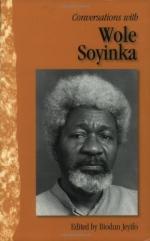
Search "Wole Soyinka"
|

|
About 438 pages (131,331 words) in 41 products |
|


| Name: |
Wole Soyinka | | Birth Date: |
July 13, 1935 | | Place of Birth: |
Abeokuta, Nigeria | | Nationality: |
Nigerian | | Gender: |
Male | | Occupations: |
playwright |
summary from source:

Biography of Wole Soyinka
1,265 words, approx. 4 pages
 The Nigerian playwright Wole Soyinka (born 1935) was one of the few African writers to denounce the slogan of Negritude as a tool of autocracy. He also was the first black African to be awarded the Nobel Prize in Literature. Wole Soyinka was born July...
summary from source:

Biography of Wole Soyinka
22,631 words, approx. 75 pages
 Until he became, in October 1986, the first black African writer to be awarded the Nobel Prize for Literature, Wole Soyinka was probably best known within his own country, Nigeria, as a political activist with a fierce commitment to individual liberty...


Encyclopedia and Summary Information
summary from source:

Wole Soyinka Information
4,969 words, approx. 17 pages
 Akinwande Oluwole "Wole" Soyinka (born 13 July 1934) is a Nigerian writer, poet and playwright. Some consider him Africa's most distinguished playwright, as he won the Nobel Prize in Literature in 1986, the first African since Albert Camus so honored....


summary from source:
 AP News
Nobel laureates seek Turk-Armenian peace
4/10/2007: 333 words, approx. 1 pages Fifty-three Nobel laureates are calling on Turkey and Armenia to open their border and resolve their differences over the mass killings of Armenians by Turks in the early 20th century.In a letter released Monday by the Elie Wiesel Foundation for Humanity, the group urged Turkey...
summary from source:
 AP News
Obasanjo leaves Nigeria uncertain future
5/28/2007: 877 words, approx. 3 pages When Olusegun Obasanjo was elected Nigeria's president in 1999, Nigerians hoped long years of military misrule were behind them and stable democracy was ahead.As he leaves office Tuesday, Nigeria's democracy is in doubt, and its people seem uncertain of their future. But Obasanjo, a 70-year-old...
summary from source:
 AP News
Oil gives unhappy Nigerians leverage
6/5/2007: 1,067 words, approx. 4 pages Young boys scamper along weed-entangled pipes, transforming an oil-pumping station marked "Not In Use" into a jungle gym in the heart of Nigeria's lawless oil region. Nearby wells rust under the palm trees, and gas-flaring chimneys have gone cold.The scene in Ogoniland, where villagers ousted...
summary from source:
 AP News
Soyinka: Writers are citizens first
4/28/2007: 943 words, approx. 3 pages When Nigerian Nobel literature laureate Wole Soyinka contemplates the role of a writer in society, he defines it in terms of political and social action.In 1965, upset that a politician who had rigged the vote was about to claim victory in a radio broadcast, Soyinka,...


Literary Criticism
summary from source:

Critical Essay by Yaw Adu-Gyamfi
9,628 words, approx. 32 pages
 In the following essay, Adu-Gyamfi evaluates Soyinka's use of African oral traditions in Ogun Abibiman, noting that the collection's vocabulary “reflects a highly conscious sense of African oral poetics.”
summary from source:

Critical Review by David Rieff
8,347 words, approx. 28 pages
 In the following review, Rieff chronicles recent Nigerian history and discusses Soyinka's outlook in The Open Sore of a Continent: A Personal Narrative of the Nigerian Crisis toward the repressive Nigerian regime and the relative indifference of the West.
summary from source:

Critical Essay by Derek Wright
6,660 words, approx. 22 pages
 In the following essay, Wright explores the major themes of Soyinka's later “shotgun” satires, focusing on the political elements in such plays as A Play of Giants and Requiem for a Futurologist.
Featured Essays
summary from source:
 Essay Grade: 81%
The Use of Irony in "The Telephone Conversation"
472 words, approx. 2 pages
 The poem "The Telephone Conversation", written by the African poet Wole Soyinka, depicts a West African man's attempt to rent an apartment from a white landlady and the landlady's refusal to grant his request based on his skin color. Three instances -- the speaker's "self-confession" about his skin color, the description of the landlady, and the speaker's use of high diction in making the landlady appear foolish -- exemplify Soyinka's use of irony to depict the absurdity of racism and c


|
About 438 pages (131,331 words) in 41 products |
|
|