Biography Essay"I am . . . a part of all that I have touched and that has touched me . . . ." These words by Thomas Wolfe seem tailor-made for the author. They capsulize his life and art, which often ...
Read more

Thomas Clayton Wolfe (1900-1938) was an American novelist of prodigious talent and equally formidable failings. His highly autobiographical novels are notable for fervent energy, uninhibited emotion, ...
Read more
"I am ... a part of all that I have touched and that has touched me...." These words by Thomas Wolfe open the picture-story book The Lost World of Thomas Wolfe . They capsulize his life and art, w...
Read more
Best known for his four novels-- Look Homeward, Angel (1929); Of Time and The River (1935); The Web and The Rock (1939); and You Can't Go Home Again (1940)-- Thomas Wolfe was also the author of an im...
Read more
In the following essay, originally published in 1950, Stegner characterizes "The Lost Boy" as an adept and magical incantation to time and the power of the past.
The writings of Thomas W...
Read more
In the following essay, Boyer outlines developments in Wolfe's presentation of the city in his stories, noting his "growing compassion for and identification with city-dwellers" t...
Read more
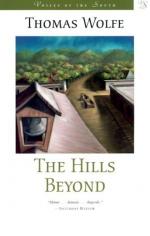
In the following excerpt, Evans discusses and evaluates the writing of Wolfe's collections of short fiction From Death to Morning, The Hills Beyond, and The Short Stories of Thomas Wolfe.
Altho...
Read more
In the following essay, Stutman praises the artistic technique of "The Child by Tiger, " in which she observes Wolfe "fashioned a notable artistic statement about one man's...
Read more
In the following essay, Boyer argues that "Only the Dead Know Brooklyn " effectively presents a message urging readers to experience life with intensity rather than to attempt to experie...
Read more
In the following essay, Johnston looks at the publication history and literary technique of "An Angel on the Porch, " calling it "a far more complexly crafted and important piece ...
Read more
In the following essay, Gantt analyzes the intermingling of narrative voices, racial ideology, and literary discourse in Wolfe's story "The Child by Tiger."
In the more than fifty...
Read more
In the following essay, Idol explores Wolfe's discourse of "steadfast opposition to the suspicion, mistrust, hatred, betrayal and atrocities in German society under Hitler's craze...
Read more
In the following essay, Bentz characterizes Wolfe as an experimentalist in short fiction whose use of non-traditional plot structure and thematic epiphany align his short stories with those of his mod...
Read more
In the following essay, originally published in 1961, Hartley examines the theme of loneliness in Wolfe's story "The Lost Boy."
In Thomas Wolfe's story "The Lost Boy...
Read more
In the following essay, originally published in 1961, Holman studies Wolfe's seven short novels, which he argues represent some of the author's best work, and which "helped to sus...
Read more
In the following essay, originally published in 1964, Bloom focuses on mood, tone, and theme in "Only the Dead Know Brooklyn, " contending that the story tells us that "to cease s...
Read more
In the following essay, Eichelberger analyzes Wolfe's short novel No Door, calling it "his most effectively controlled presentation of the dominant theme of loneliness and aloneness whic...
Read more
In the following excerpt, Gurko examines Wolfe's short stories "In the Park" and "The Lost Boy, " both of which present the theme of life appreciated through the con...
Read more
In the following essay, Domnarski describes A Portrait of Bascom Hawke as a "tightly structured work" and investigates its themes of the cycles of life, youth, age, and time.
Maxwell Per...
Read more
In the following essay, Adams evaluates the coming and going pattern of memory, time, and location in Wolfe's story "The Lost Boy."
Thomas Wolfe's famous phrase, "Yo...
Read more
In the following essay, Hall probes Wolfe's use of the literary device of contrast to highlight his theme of "the dual nature of man " in "The Child by Tiger, " a st...
Read more