Thomas Aquinas
THOMAS AQUINAS (Tommaso d'Aquino, 1225–1274), Italian Dominican theologian, doctor of the church, patron of Roman Catholic schools, and Christian saint. One of the most im...
Read more
St. Thomas Aquinas
c. 1225-1274
Italian Philosopher
The writings of Thomas Aquinas represent the pinnacle of medieval Scholasticism, a school of thought that attempted to bring together Christian fait...
Read more
Thomas Aquinas
Thomas of Aquino (ca. 1225–1274), a philosopher and theologian, was born into an aristocratic family at Roccasecca, near Naples, Italy. He joined the Dominican order in 1245, tak...
Read more
Thomas Aquinas, St.(C. 1224–1274)
St. Thomas Aquinas, the Catholic theologian and philosopher, was born at Roccasecca, Italy, the youngest son of Landolfo and Teodora of Aquino. At about the ag...
Read more
St. Thomas Aquinas was an Italian theologian and philosopher of the Dominican Order of the Catholic Church. He was educated or taught at Monte Cassino, the Universities of Naples and Paris, and the Th...
Read more
Thomas Aquinas is rivaled in reputation as the paramount Christian intellectual only by Augustine. Venerated within the Catholic church as a saint and as a normative theologian, Aquinas is esteemed in...
Read more
The Italian philosopher and theologian St. Thomas Aquinas (ca. 1224-1274) was one of the foremost minds of medieval scholasticism. He is recognized as the leading theological authority within the Roma...
Read more
St. Thomas Aquinas was born Thomas d'Aquino near Naples in 1225 to a noble family. His parents, Lundulph, Count of Aquino, and Theodora, Countess of Teano, were related to the Emperors Henry VI and Fr...
Read more
Peter Abelard was a renowned dialectician from 1079 to 1142. He subjected theological doctrines to logical analysis. In other words, he used rational argument to discover truth. Saint Thomas Aqu...
Read more
St. Augustine was born in a small town called Tagaste. In this small town, in 254a.d. a very intelligent, yet rebellious and important life started. Augustine was a troublesome child from his beginn...
Read more
"Thomas Aquinas: Scholastic Theologian and the Creator of the Medieval Christian Synthesis" reinstated the mind of reasoning and the understanding of what education is. Aquinas indeed was a very in...
Read more
The most influential thinker of the medieval period, Thomas Aquinas' philosophy combined Aristotelianism and elements of Neo-Platonism within a context of Christian thought. Out of all the writings Aq...
Read more



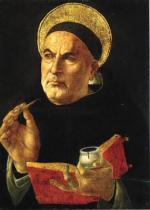
 Thomas Aquinas
 St. Thomas Aquinas
 Thomas Aquinas
 Thomas Aquinas, St. (C. 1224-1274)
 St. Thomas Aquinas
 Thomas Aquinas
 Thomas Aquinas, St.
 Thomas Aquinas, St.

