|
|

Search "The Man Who Loved Children"
|

|
The Man Who Loved Children | |
|
About 19 pages (5,543 words) in 5 products |
|

Encyclopedia and Summary Information
summary from source:

The Man Who Loved Children Information
169 words, approx. 1 pages
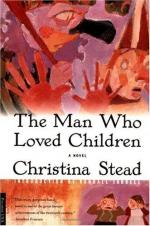
 The Man Who Loved Children is a 1940 novel by Australian writer Christina Stead. Although the novel was published much earlier, it wasn't until it was reissued in 1965 that the book found widespread critical acclaim and...


summary from source:
 The Independent - London
A job for those who love children
03/06/2008: 788 words, approx. 3 pages RECRUITMENT British-trained nannies have a good reputation and can command decent salaries. By Caroline Roberts Job prospects for nannies have never been better. It's no longer just the twinset-and-pearls types living in the country and driving a Range Rover who employ them,...
summary from source:
 The Independent - London
The children who hate to be loved
07/29/1994: 1,891 words, approx. 6 pages George was 18 months old when Lucy and Martin Lansdowne adopted him. They knew it was an act of faith. The couple, who already had two adopted children, had seen him advertised and heard that his mother had not wanted him, had scarcely touched...


Literary Criticism
summary from source:

Critical Essay by Joan Lidoff
2,271 words, approx. 8 pages
 At the heart of Christina Stead's fiction echoes the persistent moral issue: egotism. She sees everyone striving by subtle or overt manipulations to subordinate others to his or her own needs and desires, trying to take as much while giving as little as possible. In her 1940 masterpiece, The Man Who Loved Children, Stead criticizes this ongoing struggle between competing egotisms, not only in her characterization and analysis, but in the very form of her fiction. This novel takes as protagonist no si...
summary from source:

Critical Essay by Dorothy Green
1,961 words, approx. 7 pages
 [In The Man Who Loved Children] Christina Stead has created what is extremely rare in modern literature: three archetypal characters who have a life of their own, independent of their author; characters like Dickens's Uriah Heep or Mr Micawber, who can be known to those who have never read the books in which they figure. This is particularly true of Sam Pollit, 'the man who loved children'. The ironical title defines him as the phrase 'humble as Uriah Heep' defines Heep. F...
summary from source:

Critical Essay by Charles Thomas Samuels
738 words, approx. 3 pages
 [Christina Stead] appeals through the oddness of her characters and the relentless, uniquely resourceful dialogue through which she creates them. But the very amplitude of her portraits demands a significance she finds difficult to establish. The baby-talking egoist Sam Pollit [in The Man Who Loved Children] never comes to represent colonial condescension, though Stead hints at the connection, just as Nellie Cotter, in last year's Dark Places of the Heart, never quite distills the cant of England...


|
The Man Who Loved Children | |
|
About 19 pages (5,543 words) in 5 products |
|
|
|


|
|  |
 |
|  |