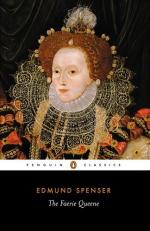
The Faerie Queene
by Edmund Spenser
Born in the early 1550s, Edmund Spenser began his education at the Merchant Taylors school in London. He later attended Cambridge on a sizars sch...
Read more
INTRODUCTION
I. The age which produced the
FAERIE QUEENE
The study of the Faerie Queene should be preceded
by a review of the great age in which it was written.
An intimate relation exists betwe...
Read more
Biography EssayTo understand Edmund Spenser's place in the extraordinary literary renaissance that took place in England during the last two decades of Queen Elizabeth I's reign, it is helpful to begi...
Read more
Edmund Spenser (ca. 1552-1599) ranks as the foremost English poet of the 16th century. Famous as the author of the unfinished epic poem The Faerie Queene, he is the poet of an ordered yet passionate E...
Read more
To understand Edmund Spenser's place in the extraordinary literary renaissance that took place in England during the last two decades of the reign of Queen Elizabeth, it is helpful to begin with the r...
Read more
In the following excerpt from his survey of English literature, Taine gives an overview of Spenser and The Faerie Queene in the context of the English Renaissance.
Spenser belonged to an ancient famil...
Read more
In the following excerpt from a study of Spenser's poetry, Nelson analyzes Spenser's use of allegorical types to convey his meaning. He focuses on Spenser's use of Queen Elizabeth...
Read more
In the following excerpt from a study of praise in Spenser's Faerie Queene, Cain presents the poem as a tribute to Queen Elizabeth.
The Muse of "the Faerie Queene"
Ariosto invokes...
Read more
In the following essay, Anderson analyzes the significance of the complex and often critical portrait of Queen Elizabeth in books III and IV of The Faerie Queene.
Even in the 1590 Faerie Queene, Spens...
Read more
In the following excerpt from a study of The Faerie Queene in relation to the cult of Elizabeth, Wells analyzes Spenser's use of allegory to honor Queen Elizabeth.
1. the Poetry of Praise
...
Read more
In the following essay, Quilligan analyzes the allegorical representation of female power and authority in The Faerie Queene.
Basing his argument on Anthony Munday's recasting of an Italian pla...
Read more
In the following excerpt, originally published in 1715, Hughes points out significant flaws in The Faerie Queene but also demonstrates its beauty.
The chief Merit of this Poem consists in that surpriz...
Read more
In the following essay, Mallette examines Book I of The Faerie Queene in the context of English Reformation ideas about Protestant preachers and preaching.
At a privotal point in Spenser's Lege...
Read more
In the following essay, Bowman discusses Spenser's treatment of Queen Elizabeth I in Book V of The Faerie Queene.
“The woman who has the prerogative of a goddess, who is authorized to be...
Read more
In the following essay, Stump discusses the role of Mary Stuart (also known as Mary Queen of Scots) in Book V of The Faerie Queene.
Scholars seem to have reached a consensus on Spenser's treatm...
Read more
In the following essay, Walker discusses Spenser's exposition of Queen Elizabeth I and her royal lineage through the epic narrative of The Faerie Queene.
Suggesting that the royal houses of Ren...
Read more
In the following essay, Fruen discusses the place and significance of Queen Elizabeth I in the allgorical scheme of The Faerie Queene.
In a previous essay I argued that Gloriana, despite appearances t...
Read more
In the following essay, Hadfield explores the characterizations of Irena and Serena in The Faerie Queene in relation to Queen Elizabeth I and to Spenser's general attitude toward women.
There h...
Read more
In the following essay, Stump focuses on Spenser's perception of Queen Elizabeth I as a female monarch of the English Reformation in Books III and V of The Faerie Queene.
A number of recent stu...
Read more
In the following essay, Mazzola discusses the portrayals of Queen Elizabeth I and Mary Stuart (also known as Mary Queen of Scots) in Spenser's The Faerie Queene and Shakespeare's King Le...
Read more
In the following excerpt, originally published in 1936, Lewis discusses the various levels of moral and philosophical allegory in The Faerie Queene.
Let us return to the Knight and the Lady in the ope...
Read more
In the following excerpt, Bradner provides an overview of the multiple storylines and the central themes in Books III, IV, and V of The Faerie Queene.
When Gabriel Harvey read the specimen of the Faer...
Read more
In the following excerpt, Parker discusses Book V of The Faerie Queene as an allegory about justice and equity.
Book Five of The Faerie Queen belongs on the whole, to the knight it is assigned to, Art...
Read more
In the following essay, Bednarz discusses the historical context of The Faerie Queene and focuses on representations of the relationship between Queen Elizabeth I and Sir Walter Raleigh in the poem.
T...
Read more
In the following essay, Benson discusses Spenser's depiction of female monarchy in Books III and V of The Faerie Queene noting what it reflects about Spenser's own attitude toward Elizab...
Read more
In the following essay, Panja applies structuralist and poststructuralist critical theories to an analysis of Spenser's narrative in Book VI of The Faerie Queene, emphasizing how the text of th...
Read more
In the following essay, Imbrie discusses the characters in The Faerie Queene who emerge as “false preachers,” delivering sermons that represent perversions of biblical rhetoric.
Guyon...
Read more
In the following essay, Quilligan discusses Spenser's use of humor in writing about Queen Elizabeth I in The Faerie Queene.
Basing his argument on Anthony Munday's recasting of an Italia...
Read more
The poem, "The Faerie Queene", is a story about a courageous knight who goes through great trials and fights monsters. This in itself is entertaining but, it also has many allegorical references to C...
Read more
Teaching The Faerie Queene
All teaching products sold separately.
The Faerie Queene Lesson Plans contain 157 pages of teaching material, including:
Question 1 of 10:
England
was struck by famine in 1316 after farms were devastated by...?Crop diseaseA drought
Torrential rain
Civil warQuestion 2 of 10:The infamously incompetent King Edward II ...
Read more