This short novel is an account of the South American warrior prince Oroonoko and his beloved Imoinda. Written in the mid-1600’s and narrated by a character notable for her resemblance to the author (the free-thinking, independent-minded Aphra Benn), the work incorporates elements of fairy tale, parable, and morality lecture into a story that is ultimately about a good man’s increasingly desperate struggle to live a life of dignity while being treated like, and expected to behave like, a slave.
Oroonoko, or The Royal Slave: A True History
by Aphra Behn
Little is known about the enigmatic Aphra Behn other than the fact that she was the first Englishwoman to write professionally. She is bel...
Read more
English poet, novelist, and playwright Aphra Behn (ca. 1640-1689) was the first of her gender to earn a living as a writer in the English language.Aphra Behn was a successful author at a time when few...
Read more
All women writers, observed Virginia Woolf in A Room of One's Own (1928), "ought to let flowers fall upon the tomb of Aphra Behn, for it was she who earned them the right to speak their minds." The pr...
Read more
Aphra Behn was one of the best and most successful comic writers in a great age of English comedy. If her plays are less polished than those of George Etherege and William Wycherley, it must be rememb...
Read more
Aphra Behn, one of the most influential dramatists of the late seventeenth century, was also a celebrated poet and novelist. Her contemporary reputation was founded primarily on her "scandalous" plays...
Read more
Aphra Behn, a certainly extraordinary woman, especially for the age she lived in, still attracts critical attention with her novella Oroonoko, which is going to be the subject of this essay.
The text...
Read more
Essay #1
In life and in literature, love and passion often drive a man to succeed. The drive was often led by a passionate cause, such as a woman. With this passion, a man could defy all obstacles a...
Read more
Oroonoko is an intriguing and epic story of a young African prince who gets tricked into becoming a slave for a workers plantation written by the first professional woman author, Aphra Behn. As the ...
Read more



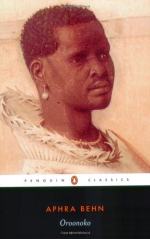
 Oroonoko, or The Royal Slave: A True History
 Aphra Behn
 Aphra Behn

