In the following review, Wengenroth offers a tempered assessment of Paper and Iron, concluding that final judgement of the book depends upon a reader's “political taste.”
After...
Read more
In the following review, Hertzberg offers praise for the first volume of The House of Rothschild.
Some years ago, a British journalist surveyed the descendants of the Jews who had been granted here...
Read more
In the following essay, Boynton analyzes the critical reaction to The Pity of War and provides an overview of Ferguson's academic career and historical writings.
In 1918, on the eleventh hou...
Read more
In the following review, Schwartz provides an extended analysis of The Pity of War, citing weaknesses in Ferguson's “impassioned and distorted argument.”
Americans scarcely mar...
Read more
In the following review, Bacevich concludes that The Pity of War is an “important contribution” to the study of World War I but finds Ferguson's analytical approach inadequate and...
Read more
In the following excerpt, Maier examines Ferguson's historical arguments and unconventional conclusions in The Pity of War.
The British have taken to most of their wars. Slow learners who ar...
Read more
In the following excerpt, Gress offers a positive assessment of The Pity of War but notes shortcomings in Ferguson's counterfactual approach.
The late political philosopher Sidney Hook, thou...
Read more
In the following review, Boasberg offers a positive assessment of The Pity of War.
World War I was a stupid war, stupidly fought. The carnage was horrendous. In the four years and three months that...
Read more
In the following review, Koning disputes Ferguson's historical arguments in The Pity of War.
The estimates of the number of books written about World War I are in the hundreds of thousands. ...
Read more
In the following excerpt, Kennedy examines Ferguson's controversial arguments and conclusions in The Pity of War.
It is interesting but perhaps not surprising that, as this conflict-torn cen...
Read more
In the following essay, Kagan responds to Ferguson's arguments in The Pity of War concerning the length and resolution of World War I and Ferguson's counterfactual assertions.
In Augu...
Read more
In the following review, Lieberman provides a generally positive assessment of Paper and Iron.
Entering into a field of history crowded with recent studies, including the authoritative analysis of ...
Read more
In the following review, Shaw provides an overview of the Rothschild banking dynasty and offers a positive assessment of The World Banker.
Many European and Australian bankers have recently been ad...
Read more
In the following review, Bond offers a favorable assessment of The Pity of War, but finds Ferguson's counterfactual approach problematic.
At the outset of his provocative and immensely reada...
Read more
In the following review, Morton praises the unprecedented inside perspective offered in the second volume of The House of Rothschild but complains of it's excessive detail and documentation.
...
Read more
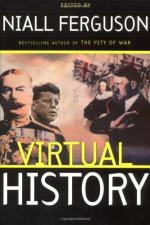
In the following review of Virtual History, Freund examines the function and application of counterfactuals in contemporary political discourse and historical scholarship.
After the historical, com...
Read more
In the following review, Tooze analyzes the methodology of Paper and Iron, which he describes as “unconvincing and distasteful,” though the book's themes are “of considerab...
Read more
In the following review, Caute offers a negative evaluation of Virtual History.
This is another novelty item in the post-modernist pavilion of ‘what if?’ history. Virtual History begi...
Read more
In the following review, Russell offers a tempered analysis of Virtual History.
Historians are less impressive at handling conceptual questions than at assembling empirical data. Like bad builders,...
Read more
In the following review, the critic discusses Ferguson's historical argument in The Pity of War.
For Europe at least, the first world war was by many accounts the defining event of this cent...
Read more
In the following review, Fairweather offers a positive assessment of The World's Banker.
Superlatives attach themselves to the Rothschild family like burrs. They are the greatest, richest, m...
Read more
In the following review, Tucker examines the methodology and merits of “alternative history” and offers an analysis of Virtual History.
“Alternative history” is an estab...
Read more
In the following review, Stern offers a positive evaluation of the first volume of The House of Rothschild.
The house of Rothschild had many mansions, but it was one house—and this gave it u...
Read more
What a fizzle. Niall Ferguson was overawed by the SRO New York audience and his Lazard Freres intoducer, an affable machine in a too-long red tie, and did not venture one bold thought on the matter...
Read more
Following Niall Ferguson's talk about Jews & Money, a lady in the second row asked whether the Balfour Declaration of 1917, in which the British government committed itself to a homeland for th...
Read more
To historians and others pondering Iraq, forecasting a final outcome for that sad land is like finding your way through one of its "shamal" sandstorms. You may not know where you're headed, but you...
Read more
Elvis Is Titanic, out in late August from Knopf. Mr. Klaus seemed more subdued since last we sighted him, in September 2005, when the majority of the worldâs newspapers noted the ...
Read more