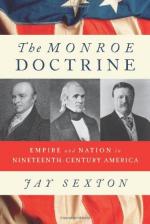
The Monroe Doctrine is a U.S. doctrine which, on December 2, 1823, proclaimed that European powers would no longer colonize or interfere with the affairs of the newly independent nations of the Americas. The United States planned to stay neutral in wars...
Educator Lorraine Moore believes that all children are teachable and capable of success. She demands order and respect from her minority pupils at Frederick Douglass Academy in New York, NY, and bases her methods on the tough teaching she received as a child. ...
This article presents a brief history of the Monroe Doctrine since its articulation in 1823. First conceived as a statement in opposition to European intrusions in the Americas, it became under President Theodore Roosevelt a justification for U.S. intervention. To cultivate Latin American trade...
Latin America: As U.S. allies go, we can't get one better than Colombia. It helps us a lot and now seeks free trade. But all it gets from Congress is a slap in the face. We now risk losing a vital ally.President Alvaro Uribe is...
(Bernd Debusmann is a Reuters columnist. The opinions expressed are his own) By Bernd Debusmann WASHINGTON, Dec 5 (Reuters) -"Anyone who votes 'No' is voting for George W. Bush. Our true enemy is the U.S. Empire." In the closing hours of a referendum on...
The Monroe Doctrine was forumlated by President James Monroe in 1823 in response to the growing possibility of European colonial expansion in the New World. It stated that only the United States could influence political matters in Central and South America, and it warned European nations not to involve themselves in the affairs of these regions. The Monroe Doctrine has evolved through the years as an important component of U.S. foreign policy, and aspects of the doctrine continue to be applied today.