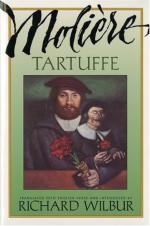
The French dramatist Molière (1622-1673) wrote comedies that range from simple farces to sophisticated satires. The master of French comedy, he was both the product and the critic of the French...
Read more
Molière's talents as both a writer and an actor were so great that at the height of his career he was often confused with the characters of his plays, whether cuckolded and browbeaten husbands,...
Read more

In the following essay, Bermel discusses the balance between comedy and tragedy in Molière's theater.
Molière's longer plays have often unsettled critics who like to kee...
Read more
In the following essay, Phillips examines the changing attitudes towards Molière's drama, focusing on the criticisms of the church.
The year 1922 marked the three-hundredth anniversar...
Read more
In the following essay, Shaw examines Molière's use of comic denouements, contending that they suggest that real-life endings are not always happy.
Many would say that Molière&...
Read more
In the following essay, Kenny explores Molière's struggles in creating the new genre of musical-comedy.
Much modern criticism has positively re-evaluated Molière's com...
Read more
In the following essay, Peacock discusses the issues surrounding the translation of Molière's plays, focusing on three types of translators: conservationists, modernists, and postmoderni...
Read more
In the following essay, Riggs discusses the relationships between desire, discourse, and the institutionalized world as presented in Molière's comedies.
… the ocularcentrism of...
Read more
In the following essay, Gaines delineates the connection between Marx and Molière.
Of all the avatars of structuralism that fueled the critical imagination during the third quarter of this c...
Read more
In the following essay, Lindsay provides an in-depth look at Molière's L'Impromptu de Versailles, commenting on possible reasons why the play has been overlooked.
Molièr...
Read more
In this essay, Hartley argues that in Molière's plays a character's use of language reveals the reliability of his or her authority, and that Molière satirizes those who va...
Read more
In this excerpt, Whitton reviews the performance history of Don Juan, one of Molière's more challenging comedies from an interpretive standpoint. For Whitton, the servant character of Sg...
Read more
In this excerpt, Harrison argues that Molière's depiction of the relationship between artistic creation and patronage demonstrates his own status as a royal servant. The critic finds tha...
Read more
In this excerpt, McBride focuses on La Comtesse d'Escarbagnas and, particularly, on The Learned Ladies as grand aesthetic spectacles. McBride argues that the sheer theatricality of The Learned ...
Read more
In this essay, Jaymes explicates Molière's view of health and medicine, arguing that his satire of doctors is rooted in questions of responsibility and what constitutes appropriate autho...
Read more
In this excerpt, Carmody develops a methodology for interpreting Molière's works through the lens of twentieth-century stagings. Carmody's interest is in how these stagings addres...
Read more
In this essay, Maber traces the sexual humor throughout Molière's works, distinguishing playwright's use of bawdy, a broad, obvious form of comedy, from his use of subtle double e...
Read more
In this essay, McCann claims that the humor in the character of Harpagon in The Miser comes not from his excessive avarice but from his paradoxical but inherently logical revisions of concepts of gene...
Read more
In this excerpt, Fleck reviews comic theory from Aristotle to the twentieth century as a context for examining Molière's comic method in his comedy-ballets, focusing on notions of parado...
Read more
Nelson is an American critic and educator whose works on French literature include Play Within a Play: The Dramatist's Conception of His Art (1958), and Corneille: His Heroes and Their Worlds (...
Read more
Hubert is an American essayist and critic. In the following essay, he discusses characterization, setting, and language in Dom Juan, which he considers to be one of Molière's most contro...
Read more
Gossman is Scottish essayist and educator. In the following excerpt, he discusses "the comic hero's relation to the world" in Molière's plays, focusing on the themes...
Read more
Wilson is an English educator and critic. In the following essay, he discusses the characteristic comic techniques of Molière 's dialogue.
Molière's style, long praised ...
Read more
Eustis is an American critic, translator, and educator. In the following excerpt, he discusses the structure of Molière's plays and suggests that an ironic situation or paradox is at the...
Read more
Mould is an American educator and critic who specializes in seventeenth-century French theater. In the following essay, he examines Molière 's treatment of the paradoxical relationship b...
Read more
Howarth is an English educator and critic whose works on French literature include Life and Letters in France: The Seventeenth Century (1965), and Sublime and Grotesque: A Study of French Romantic Dra...
Read more
Knutson is an American educator and critic whose writings on French literature include Molière: An Archetypal Approach (1976). In the following essay, he examines Molière's portra...
Read more
In the following excerpt, Greenberg offers a psychoanalytic explanation for the fearful reaction against Le Tartuffe during the seventeenth-century.
Unquestionably Le Tartuffe is Molière...
Read more