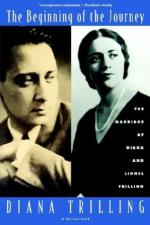
Lionel Trilling ( 1905-07-04 – 1975-11-05 ) was an American literary critic, author and educator. Contents 1 Sourced 1.1 Matthew Arnold (1939) 1.2 The Portable Matthew Arnold (Viking Press, 1949) 1.3 The Liberal Imagination (1950) 2 External links //...
Lionel Trilling was one of the two or three most influential literary intellectuals in the period from 1950, when he published The Liberal Imagination, until his death in 1975, by which time he was widely regarded as a spokesman on general cultural...
Among American critics of the twentieth century, Lionel Trilling was especially illuminating, subtle, and wise. His consummate intelligence, which found its most congenial expression in the poise and discernment of his essays, earned an admiration that...
Lionel Trilling (July 4, 1905 – November 5, 1975) was an American literary critic, author, and teacher. Trilling was a member of the group known as "The New York Intellectuals" and was a frequent contributor to the Partisan Review. Although he...
The FBI dossier on Lionel Trilling discloses that the Bureau followed his activities intermittently for almost three decades. An active file was maintained on Trilling from the late 1930s to the mid-1960s. Most of these reports address Trilling's peripheral connection to ongoing FBI probes...
IN HIS WELL-KNOWN PREFACE TO THE LIBERAL IMAGINATION (1950) LIONEL Trilling notes that John Stuart Mill, "at odds with Coleridge all down the intellectual and political line, nevertheless urged all liberals to become acquainted with this powerful conservative mind." (1) That Trilling will follow...
ALFRED KAZIN: A BIOGRAPHY By Richard M. Cook Yale University Press, 452 pages, $35 With the death of Alfred Kazin in 1998 at the age of 83, the kind of high-end literary journalism that he’d devoted his life to in over a thousand book reviews,...
This collection of 20 recent essays by Cynthia Ozick begins with a memorial appreciation of Susan Sontag. It’s noble and notable that Ms. Ozick should appreciate Sontag, a vanquishing rival for literary reputation and, equally to the point, a liberal emanating from the old Partisan...
It was common for critics to maintain, during the years in which Trilling wrote his major books, that the relation between the individual artist and society was a relation between virtue and vice, or at least a relation between the highest aesthetic purity and the worst conditions which an indifferent society would impose upon a pure intention. Society was deemed to be a bourgeois conspiracy of the worst to thwart the best: the artist was regarded as a holy man in the degree of his victimage. Artist and cri...
[Much] of what was fresh in American writing after the war came down in the fertile precipitate of ideas and attitudes released into [writers' and intellectuals'] thought by the chemistry of socialism on the wane. (p. 4) It was in the post-war climate of stalemate and reassessment that Lionel Trilling came to prominence as a spokesman for ambivalence, moral realism (that is, the acceptance of "good-and-evil"), ideas in modulation, and the tragic view of life. He emerged in the fo...
Lionel Trilling is one of the few critics of any standing to have actually written at some length on the relationship between psychoanalysis and literature. Aside from the incidental use which he makes of psychoanalytic ideas in the regular course of his criticism, he has several times directed his attention specifically to evaluations of what this relationship has been in the past and may be in the future. In particular, there are three essays which may well serve as milestones in his consideration of the ...
Get the complete Lionel Trilling Study Pack, which includes everything on this page (except "Works by Author"). Approximately 163 pages (at 300 words per page) in 14 products.