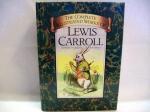
Carroll, Lewis
British Mathematician, Writer, and Photographer 1832–1898
Lewis Carroll is the pen name of Charles Lutwidge Dodgson, who was born in Darebury, England, in 1832 and died in Guildf...
Read more
Carroll
The contributions of Lewis Carroll (Charles L. Dodgson, 1832–1898) to logic consist of several pieces published between 1887 and 1899. The Game of Logic (London, 1887) is a book written...
Read more
Carroll, Lewis(1832–1898)
Lewis Carroll is the pen name of Charles Lutwidge Dodgson. The eldest son of a large clerical family, he was born at Daresbury, Cheshire, was educated at Rugby School,...
Read more
Carroll, Lewis [addendum]
The success of the "Alice" books established Charles L. Dodgson's reputation as a gifted writer of children's literature. His admirers expected hu...
Read more
Biography EssayLewis Carroll (the Reverend Charles Lutwidge Dodgson) was a Victorian nonsense writer for children whose works hold enduring fascination for adults as well. His Alice's Adventures in W...
Read more
The English cleric Charles Lutwidge Dodgson (1832-1898), who wrote under the name Lewis Carroll, was the author of Alice in Wonderland and Through the Looking Glass. He was also a noted mathematician ...
Read more
Charles Dodgson was the oldest of eleven children in a parish priest 's family. Every member of the Dodgson family stammered including Charles, who was also intensely shy, but these impediments did no...
Read more
Lewis Carroll is actually a pseudonym, the pen name taken by Charles Lutwidge Dodgson. Although best known for his children's books, Dodgson worked professionally as a mathematician, studying particul...
Read more

Charles Lutwidge Dodgson was an author, mathematician, teacher, and photographer who is described by Roger Lancelyn Green in Twentieth Century Children's Writers as "probably the most quoted author in...
Read more
Lewis Carroll (the Reverend Charles Lutwidge Dodgson ) was a Victorian nonsense writer for children whose works hold enduring fascination for adults as well. His Alice's Adventures in Wonderland (1...
Read more
Self-effacing, yet having an expressive critical ability; reveling in the possibilities of fancy, though thoroughly at home with the sophisticated nuances of logic and mathematics, Lewis Carroll (Char...
Read more
Few writers of fantasy have managed to permeate their own cultures as did Charles Lutwidge Dodgson, a mathematician and amateur photographer who wrote children's books under the pseudonym Lewis Carrol...
Read more
In the following excerpt, Wilson argues for a serious critical approach to Carroll's work.
… If Dodgson and his work were shown as an organic whole, his "nonsense" would...
Read more
In the following excerpt, Sewell argues that the "real world" can be found in nonsense literature, particularly in the Barrister's dream in The Hunting of the Snark.
… A...
Read more
In the following excerpt, Greenacre discusses nonsense and aggression as they are manifested in the works of Lewis Carroll and Edward Lear.
This paper will deal with nonsense and its relation to ag...
Read more
In the following excerpt, Holquist argues that Carroll's work is essential to Modern Literature Studies and that it it exhibits all the tenets of modernism.
Because the question "What...
Read more
In the following excerpt, Bratton argues that Carroll's work has origins in the Victorian Popular Ballad form.
…. By the middle of the [nineteenth] century the comic ballad world was ...
Read more
In the following excerpt, Madden argues that the critically-debated framing poems of the Alice books serve several nineteenth-century literary purposes.
Over the past thirty years Lewis Carroll stu...
Read more
In the following essay, Polhemus explores Carroll's representation of children, suggesting that the idea of using children as subjects in fiction was just emerging when the Alice books were pub...
Read more
In the following essay, Schwab considers Carroll's experimental treatment of language, maintaining that his work anticipates the twentieth-century movements of surrealism, modernism, and postmo...
Read more
In the following essay, Miller maintains that Carroll's two novels aimed at adult readers are constructed according to a highly organized plan and conform to many of the conventions associated ...
Read more
In the following excerpt, Kelly discusses Carroll's poetry, maintaining that his serious verse is of poor quality, while his humorous verse is brilliant.
I Serious Verse
Lewis Carroll'...
Read more
In the following essay, originally published in 1984, Cohen discusses Dodgson's views on higher education for women and his personal contributions to the education of women and girls in mathema...
Read more
In the following essay, Cohen addresses critical speculation about Carroll's sex life.
A few years ago a well-known writer came to talk with me about Lewis Carroll. He was writing a biograph...
Read more
Mary Ellen Solt, who used letter and word arrangements to enhance the meaning of a poem and was a leader in the "concrete poetry" movement, has died. She was 86.Solt died June 21 in Santa Clarita a...
Read more
Slam poetry got a fresh twist when three Victorian-era re-enactors read from such poets as William Wordsworth and Emily Dickinson in a setting that was fitting for the event _ a 19th-century stone ...
Read more
It's outrageous at times, boring at others, masterfully melodic in parts and deafeningly discordant elsewhere. And at just under two hours, "Alice in Wonderland" is 30 minutes too long.This piece, ...
Read more
Media Mob special Washington correspondent Chris Shott reports:
As reporters jockeyed for the few remaining seats in U.S. District Judge Thomas F. Hogan's packed Washington courtroom, Brian Bennet...
Read more
It was the mighty Kenneth Tynan who said that among the things he could live without in the theater are Everyman characters with pretentious names like “Mr. Adam” or “Mr. Zero....
Read more
Some years ago, Leonard Bernstein wrote that composing a symphony might have become impossible since its traditional inspiration-the idea of nobility-had all but vanished from our lives. In fact, t...
Read more
For years, Julian Barnes has been not quite Nabokov or W.G. Sebald. Not quite there yet? Or not quite Julian Barnes? He’s been funny, chilled, sparkish, a dandyish surveyor of fiction and its...
Read more
For years, Julian Barnes has been not quite Nabokov or W.G. Sebald. Not quite there yet? Or not quite Julian Barnes? He’s been funny, chilled, sparkish, a dandyish surveyor of fiction and its...
Read more
To borrow a line from Yellow Submarine, in What Good Are the Arts? the English literary critic John Carey disappears up his own existence: His brilliant, provocative, wrongheaded book ends up erasi...
Read more