Kesey, Ken (1935—)
Described as a psychedelic outlaw and the "Dr. Strange" of American letters, Ken Kesey's fame as a counterculture luminary was assured with the impact of...
Read more
Ken Kesey
(1935–2001)
(Full name Ken Elton Kesey) American novelist and nonfiction writer.
Kesey became acquainted with the Beat Generation during the 1950s, when he was a teenager in Califo...
Read more
Biography EssayA writer who came of age on the West Coast during the late 1950s, Ken Kesey has been profoundly influenced by the Beats both in his life and in his work. Strictly speaking, he is not a ...
Read more
Writer Ken Kesey has often said that he would rather live a novel than write one--be a lightning rod rather than a seismograph. A lightning rod is exactly what Kesey has been, attracting not only the ...
Read more
Ken Kesey's One Flew Over the Cuckoo's Nest (1962) was a critical success from the beginning. Its popularity, particularly among college students, has grown steadily, with paperback sales soaring into...
Read more
A writer who came of age on the West Coast during the late 1950s. Ken Kesey has been profoundly influenced by the Beats both in his life and in his work. Strictly speaking, he is not a Beat writer in ...
Read more
Ken Kesey's diverse creative works provide a colorful testimony to his talent and myriad interests. His reputation as a writer depends mainly on his first two novels, One Flew Over the Cuckoo's Nest (...
Read more
[This entry was updated by Laura M. Zaidman (University of South Carolina, Sumter) from her update in the Concise Dictionary of American Literary Biography, volume 6, of the entry by Stephen L. Tanner...
Read more
In the following essay, Boardman characterizes One Flew over the Cuckoo's Nest as a formal tragedy, focusing on the thematic significance of sacrifice as a variant of the tragic experience.
Ken...
Read more
In the following essay, Scally analyzes Chief Bromden's narration in One Flew over the Cuckoo's Nest in terms of the truth of its meaning rather than the facts of its events.
I. Abstract...
Read more
In the following essay, Safer delineates the absurdist perspective and black humor tone of Sometimes a Great Notion.
Ken Kesey's One Flew over the Cuckoo's Nest (1962) has been acclaimed...
Read more
In the following essay, Larson traces the dialectical and dialogical implications of the narrative in One Flew over the Cuckoo's Nest.
In his “wry codicil” to the “Definiti...
Read more
In the following essay, Hays identifies the significance of an allusion to Dante Alighieri's La Vita Nuova at the end of part three of One Flew over the Cuckoo's Nest.
Ken Kesey ends par...
Read more
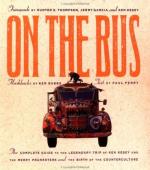
In the following essay, Goodrich recounts the circumstances surrounding the publication of Kesey's The Further Inquiry and Paul Perry and Ken Babbs's On the Bus, which both commemorate t...
Read more
In the following review, Bowden contrasts Kesey's recollections in The Further Inquiry with those of Paul Perry and Ken Babbs in On the Bus.
There was a bus.
You were either on the bus or off t...
Read more
In the following review, Searles contrasts the content and style of The Further Inquiry with On the Bus, commenting that On the Bus “surpasses Kesey's effort in virtually all respects....
Read more
In the following review, Horvath describes The Further Inquiry as an “unambitious offering” in comparison to Kesey's other works but concedes that the book is nonetheless “...
Read more
In the following review, Perry criticizes the themes, characterization, and style of Sailor Song.
Eighteen years ago, I was Ken Kesey's interpreter/guide on an expedition to the Great Pyramid. ...
Read more
In the following review, Chidley outlines the plot of Sailor Song, praising the novel's vision and insight.
Ken Kesey has had a long break between novels—28 years. After two successes wh...
Read more
In the following review, Searles assesses the literary achievement of Sailor Song within the context of Kesey's career.
It has been quite a while since One Flew over the Cuckoo's Nest (1...
Read more
In the following review, Rosenblatt discounts Kesey's credibility as a “writer-writer” in Sailor Song, labelling Kesey instead as a “culture-writer,” which, Rosenbla...
Read more
In the following interview, originally conducted during several visits between 1992 and 1993, Kesey discusses his literary influences, his relationship with the Beat writers, the effects of drugs on h...
Read more
In the following essay, Tanner correlates the humor of One Flew over the Cuckoo's Nest to certain distinctive patterns in the tradition of American humor, focusing on parallels between nineteen...
Read more
In the following review, Shone assesses the plot, style, and themes of Sailor Song, commenting that Kesey's prose has the “bounce of a piece of verbal pop art.”
Asked how he lost ...
Read more
In the following essay, Drout investigates the thematic and stylistic relationships between Sometimes a Great Notion and the medieval epic Beowulf, interpreting the former as a representation of a con...
Read more
In the following essay, Zubizarreta examines the treatment of Randle Patrick McMurphy's heroism in both the novel and the film One Flew over the Cuckoo's Nest, contrasting the experiment...
Read more
In the following essay, Semino and Swindlehurst focus on the metaphors that inform Chief Bromden's worldview in One Flew over the Cuckoo's Nest, asserting that the character's idi...
Read more
In the following essay, Nastu explores the relationship between One Flew over the Cuckoo's Nest and the visual and thematic elements of American animated cartoons.
Critics such as Leslie Fiedle...
Read more
In the following essay, Huffman outlines Kesey's attempts to incorporate technology in Twister to create a new dramatic environment, positing that the play redefines the boundaries between trad...
Read more
In the following essay, Brinkley assesses the cultural impact of Kesey's life and writings on American society within the context of the events of September 11, 2001.
The Willamette Valley was ...
Read more
In the following essay, Sullivan reports on the events of Kesey's memorial service.
“Who the hell was ever from Oregon?” some unnamed sophisticate asks in Tom Wolfe's The E...
Read more
In the following essay, Bowman summarizes the highlights of Kesey's literary career.
On November 10 last year, Ken Kesey, the leader of the Merry Pranksters, pulled what might be his greatest g...
Read more
Critical Essay by Terence Martin
When Randle Patrick McMurphy swaggers into the cuckoo's nest, brash, boisterous, with heels ringing off the floor "like horseshoes," he commands t...
Read more
In the following essay, Olderman examines Ken Kesey's novel as a “brilliant version of our contemporary wasteland and a successful Grail Knight” who frees both the Fisher King and...
Read more
Ken Kesey's life events are more than just unusual and his achievements are nothing short of extraordinary. On September 17, 1935, Ken Elton Kesey was born to his parents Fred A. and Geneva Smith, who...
Read more
Born in La Junta, Colorado on September 13, 1935 (Literary Kicks), Ken Kesey grew up to be an incredible writer, and an even better party host. Mr. Kesey attended the University of Oregon, where he o...
Read more