Locke, John
John Locke (1632–1704), was an English philosopher, Oxford academic, and occasional bureaucrat. He was born at Wrington, Somerset, on August 29 and died at Oates, Essex on October 2...
Read more
Locke, John(1632–1704)
John Locke, English empiricist and moral and political philosopher, was born in Wrington, Somerset. Locke's father, an attorney and for a time a clerk to the justi...
Read more
Locke, John [addendum]
John Locke has been, for the last three decades, the subject of a rapid expansion of interest, stimulated by Oxford University Press's Clarendon edition of his works. The...
Read more
The English philosopher and political theorist John Locke (1632-1704) began the empiricist tradition and thus initiated the greatest age of British philosophy. He attempted to center philosophy on an ...
Read more
John Locke, as the author of the Two Treatises of Government (1690), must be recognized as one of the foremost influences on American revolutionary thought. Although recent scholarship into the origin...
Read more
John Locke is probably the most important, and certainly the most influential, of all English philosophers. Although he published his first work, typically anonymously, when he was fifty-seven, by the...
Read more
The library that John Locke assembled was intended for use rather than for show. Unlike Samuel Pepys, who assembled a collection of some three thousand volumes, about the same size as Locke's, he did ...
Read more
John Locke is heralded as one of the most prominent British philosophers and men of letters. His most important philosophical work, An Essay concerning Humane Understanding: In Four Books (1689), had ...
Read more
The English philosopher and political theorist John Locke began the empiricist tradition and thus initiated the greatest age of British philosophy. He attempted to center philosophy on an analysis of ...
Read more
When ordinary citizens are living in a state of nature, it means that they are living in a society where there is not any form of governing. However, when they are living in a civil society, they are ...
Read more
In the beginning of the Second Treatise, Locke lays out his theme of his political theory, which is in order to preserve the public good, the main function of government is the protection of private p...
Read more
John Locke and Thomas Hobbes both agreed that a ruler of some sort is absolutely necessary for a country to thrive and flourish. Without a leader, the country would fall away. Hobbes and Locke's both...
Read more
The Enlightenment was a time in European history when people began to apply principles of reason and the scientific method into all aspects of society. Politics was a major factor affected by this mov...
Read more
In the beginning of the Second Treatise of Government, John Locke showed his protest against Filmer's theory about the omnipotent power of government over human beings. He assured that political power...
Read more
Thomas Hobbes and John Locke were philosophers from the seventeenth and eighteenth centuries. The two men both had very strong views on freedom and how a country should be governed. Their viewpoints ...
Read more
Almost every American - from the learned historian to the school child - can name the men who were the leaders of the American Revolution and helped create the documents that are the basis of our gov...
Read more
Some theories on human nature say that all people are naturally good, while others say that we are all by nature evil, greedy and unable to govern our own selves. John Locke, a political philosopher...
Read more
Despite a lack of government, Locke write in "Two Treaties of Government" that he believes in the self-governing of the people, and that primitive ideologies are the foundations of direction. Locke ex...
Read more



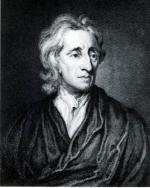
 Locke, John
 Locke, John (1632-1704)
 John Locke
 John Locke
 John Locke
