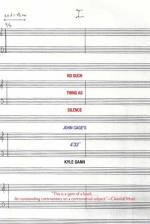
American avant-garde composer John Cage (1912-1992) experimented with the nature of sound and devised new systems of musical notation. His innovative ideas on composition and performance influenced mu...
Read more
John Cage is perhaps unique in the range and depth of his influence on post-1945 artistic practice. John Rockwell wrote in The New York Times, "As the unchallenged father figure of American experiment...
Read more

In the following interview, conducted in 1974-75, Cage discusses Mureau, his work on Thoreau's Journal and explains his experiments with the structure and sound of language in Empty Words.
I wa...
Read more
In the following essay, Perloff refutes John Hollander's negative assessment of the artistic merit of Cage's work and offers the explanation that Cage's writing—although it...
Read more
In the following essay, Sabatini describes the various media and genres of Cage's works, analyzes his experimental forms and styles, and attempts to explain his use of space and visuals to enha...
Read more
In the following essay, Herwitz views Cage's works as anarchic studies of humanity, politics, and language.
It was almost inevitable that John Cage would move from composing in music to composi...
Read more
In the following essay, Perloff examines the form and content of Cage's mesostic endeavors, arguing that in his mesostic poems, Cage adds musical texture and deeper meaning to the texts he uses...
Read more