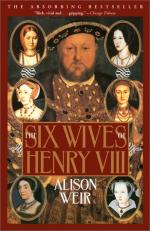
Henry VIII (1491-1547) was king of England from 1509 to 1547. As a consequence of the Pope's refusal to nullify his first marriage, Henry withdrew from the Roman Church and created the Church of Engla...
Read more
In the following essay, Uphaus examines how the historical facts of Henry VIII are absorbed by Shakespeare's use of romantic convention, and claims that the play “presents an historical ...
Read more
In the essay that follows, Noll looks to Shakespeare's Henry VIII for help in understanding the nature of the English Reformation, as well as how the history of the English Reformation informs ...
Read more
In the following essay, Kamps claims that Henry VIII emphasizes the “relative unimportance of individuals in the historical process” and resists the idealizing tendencies of literary his...
Read more
In the following essay, Bosman examines the “sensory orientation” of Henry VIII in order to observe the theatrical relation of truth and vision in the play.
I
In 1986 the editors of the ...
Read more
In the essay that follows, Kreps studies Henry VIII, claiming that the play is preoccupied with issues of time, particularly with the retrospective glance of history and the anticipatory impact of law...
Read more
In the essay that follows, Slights argues that Henry VIII represents the politically subversive potential of Christian conscience, in a way that negotiates between a glorification of Henry VIII'...
Read more
In the following essay, Glimp discusses the interaction between political authority and anxieties regarding theatrical representation in the Elizabethan period, particularly in relation to Shakespeare...
Read more
In the essay below, Magnusson examines the “social rhetoric of politeness” in Shakespeare's Henry VIII. The critic maintains that gender and class have an effect on speech pattern...
Read more
In the following essay, Hunt argues that Henry VIII shares with Shakespeare's late romances an attention to the redemptive function of speech.
For several decades, critics have recognized that ...
Read more
In the following essay, Baillie compares Henry VIII to other Shakespearean history plays, remarks on its realistic portrayal of Jacobean politics, and examines selected events and issues that occurred...
Read more
In the following essay, Dean contends that while Henry VIII shares many of the dramatic elements of the late romances, it also adheres closely to its chronicle sources.
In her recent book Biographical...
Read more
In the following essay, Patterson explores the relationship of Henry VIII to Raphael Holinshed's Chronicles, noting that Shakespeare often modified facts in order to achieve a desired dramatic ...
Read more
In the following essay, Noling suggests that through the characters of Queen Katherine and Anne Boleyn, Shakespeare was endorsing kingly authority and the notion that the proper function of queens was...
Read more
In the following essay, McMullan explores Henry VIII's treatment of contemporary definitions of manliness, examining standards of masculinity and appropriate social conduct.
I
‘Thou hast...
Read more
In the following essay, Young examines the theme of conscience as exemplified by the character of King Henry, remarking that the historical events that inspired this play dramatized a fundamental diff...
Read more
In the following essay, Battenhouse traces several parallels between Henry VIII and Boethian philosophy, remarking that the Boethian belief in God and providence reopens the debate regarding Shakespea...
Read more
In the following essay, Richmond evaluates the merits of Henry VIII, including its unity, structure, characters, historical theme, and affinity with other Shakespearean dramas, and considers the issue...
Read more
In the following essay, Young identifies the theme of conscience as the central and unifying element of Henry VIII.
Shakespeare's Henry VIII has been criticized for its lack of structural coher...
Read more
In the following essay, Leggatt examines the idealized image of England and its history intimated in the body of Henry VIII and fully expressed in Cranmer's prophecy at the end of the drama.
At...
Read more
In the following essay, Kurland traces affinities between King Henry of Shakespeare's Henry VIII and the historical King James I of England, the reigning monarch at the time of the drama'...
Read more
In the following essay, Healy highlights the theme of historiography in Henry VIII, exploring the drama's concern with the evaluation, interpretation, and malleability of historical “tru...
Read more
In the following essay, Champion analyzes the structure, characters, and themes of Henry VIII, suggesting that the play's lack of unity is outweighed by its artistic merits.
To some degree each...
Read more
In the following essay, Berry argues that Henry VIII, though not without its flaws, offers a successful blend of history, tragedy, masque, and romance. In addition, Berry examines the drama's s...
Read more
In the following essay, McMullan assesses Shakespeare's Henry VIII in relation to the Renaissance masculine ideal based upon restraint and moderation.
I
‘Thou hast made me now a man ...
Read more
In the following review of director Mary Zimmerman's 1997 production of Henry VIII, Brantley praises Jayne Atkinson's sympathetic Queen Katherine, but finds that the remainder of the cas...
Read more
In the following review of Mary Zimmerman's staging of Henry VIII in New York's Central Park, Evans lauds the period design and costumes, and assesses the main figures in the dramaȁ...
Read more
In the following excerpted review, Smallwood comments on the excellently staged, designed, and performed Royal Shakespeare Company production of Henry VIII directed by Gregory Doran.
Gregory Doran...
Read more
In the following essay, Cox contends that Henry VIII can be understood “as an experiment in adapting the principles of the court masque to the dramatic tradition of the public theaters.”...
Read more
In the following essay, Cook examines the moral and political concerns of Henry VIII and contends that the play is a “historiography that interprets history by organizing it in the process of e...
Read more
In the following essay, Richmond focuses on parallels between Henry VIII and Richard III, theorizing that Shakespeare drew upon Richard III to create the plot elements and structural patterns of Henry...
Read more
In the following excerpt, Halio offers a brief overview of the critical history of Henry VIII, accompanied by an analysis of the main action of the play.
The Play
Whether because of the authorship que...
Read more
In the essay below, Marks reviews the Royal Shakespeare Company's 1998 production of Henry VIII directed by Gregory Doran. He praises the traditional staging of the play and comments on the pro...
Read more
In the following excerpted review, Canby evaluates the Royal Shakespeare Company's production of Henry VIII at the Brooklyn Academy of Music, characterizing Gregory Doran's directorial e...
Read more
In the following excerpted review, Jackson lauds Gregory Doran's 1996-97 production of Henry VIII at the Swan Theater as a skillful balance of ceremony and stagecraft.
At the 1996-97 Swan seaso...
Read more
In the following essay, Waage argues that Shakespeare was unable to “mythologize history” in Henry VIII, maintaining that this inability “signalled the virtual end of the reign of...
Read more
In the following essay, Smidt contends that unlike Shakespeare's other histories, Henry VIII is a play of character rather than of action and pageantry—a quality it shares with some of S...
Read more
In the following essay, Hodgson argues that women play a crucial role in Henry VIII, noting that “only in Henry VIII do they become such spectacular sites, so to speak, for contesting and confi...
Read more
In the following essay, Pearlman theorizes that despite the prophecy declared by Archbishop Cranmer at the end of Henry VIII which celebrates the perfection of monarchy, the play emphasizes the ȁ...
Read more
The differences between Henry VIII of England and Calvin of Geneva can be summed up in two parts: how they viewed religion, and how they viewed politics. Calvin, the self proclaimed "long stubborn hea...
Read more
Henry VIII was a very beloved king in England throughout his period of reign from1509-1547. Although he had his critics, he maintained respect from his subjects and was a quite popular king and, as ...
Read more
Success for Wolsey mean that; the people were happy, Henry was happy, the realm was enriched, his reforms had worked and that law and order was retained. Therefore when measuring the success of Wolsey...
Read more
Prince Henry Tudor was born on June 28, 1491. He was the second son of King Henry VII and Elizabeth of York. He would never think he would be King because he has an older brother Arthur. Until the yea...
Read more