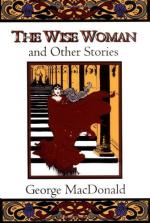
Everything you need to understand or teach
George MacDonald.
Products may contain comprehensive summaries, analysis, notes, articles, essays,
lesson plans and more. See below for details on what is included.
George MacDonald is remembered as one of the founding fathers of modern fantasy. Although he wrote many different kinds of books, including realistic novels, poetry, sermons, and literary criticism, h...
Read more
Although George MacDonald began his literary career as a poet and considered poetry to be the highest literary calling, he made his mark in Victorian literature as a novelist and fantasist. In his own...
Read more
During the mid-to late-Victorian period, George MacDonald was a public personality and a well-known literary figure. Leading critical journals printed long articles on his work; in 1869 the London Qua...
Read more
Any study that seeks to trace the influences of English and European romanticism in "mythopoeic" fantasy must turn to the works of the Scottish author George MacDonald. He was a contemporary of Lewis ...
Read more

In the following essay, John suggests that MacDonald's fantasies are valuable for feminist study because of the positive light in which they portray older women.
And when she was married and ha...
Read more
In the following essay, Boice argues that libraries are the most significant settings in MacDonald's fiction.
“Collecting jewels in a rather irregular fashion,”1 is how G. K. Ches...
Read more
In the following essay, Manlove discusses Christian elements in MacDonald's fairy tales.
What we shall see with MacDonald and Kingsley is something quite new in the development of Christian fan...
Read more
In the following essay, Mendelson provides a close reading of three fairy tales that are exemplary of MacDonald's use of the genre.
My intention here is to provide an overview of George MacDona...
Read more
In the following essay, Gunther disagrees with the notion of dualism in MacDonald's writing, positing instead that his works explore multiple realms of spiritual and psychological reality.
Crit...
Read more
In the following essay, Reis examines the symbolism and prose style that distinguish MacDonald's fantasy fiction from his conventional writings.
I of Any Length, for Any Age
Compared with his c...
Read more
In the following essay, Hein summarizes MacDonald's literary and religious beliefs as they appear in his fiction and nonfiction.
“Law is the soil in which alone beauty will grow; beauty ...
Read more
In the following essay, Manlove examines MacDonald's use of the typical pattern of fantasy literature wherein the hero returns to his home after an adventure.
Unlike the traditional fairy tale,...
Read more
In the following essay, McGillis discusses the many ways MacDonald's Princess books can be interpreted.
If influence testified to greatness, then The Princess and the Goblin and The Princess an...
Read more
In the following essay, Milner and Milner include MacDonald's works in a discussion of religious and poetic symbolism in nineteenth-century fantasy literature.
Writing classic British children&...
Read more
In the following essay, Marshall examines MacDonald's use of generic fantasy elements in “The Day Boy and the Night Girl.”
“Since polarization dominates the child's ...
Read more
George MacDonald is considered by many to have been the greatest fantasy writer of the nineteenth century. In the following essay, Manlove argues that although MacDonald's scientific background...
Read more