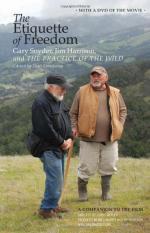
Gary Sherman Snyder (1930 – ) American Writer and Poet
Snyder was born in San Francisco but grew up in the Northwest, learning about nature and life in cow pastures and second-growth forests....
Read more
Gary Snyder
(1930–)
(Full name Gary Sherman Snyder) American poet, translator, autobiographer, travel writer, and essayist.
Snyder’s stature as both a counterculture figure and an inno...
Read more
Gary Snyder was born in San Francisco, California. He has married three times, the first two marriages ending in divorce. In 1950 he married Alison Gass and was divorced in 1951; in 1960 he married Jo...
Read more
What Gary Snyder brought to the Beat Generation of the mid-1950s and early 1960s he has augmented, reinforced, and intensified for the literary culture of the 1970s and 1980s. From his outset as a poe...
Read more
As Wendell Berry writes in his contribution to Gary Snyder: Dimensions of a Life (1991), "One thing that distinguishes Gary Snyder among his literary contemporaries is his willingness to address himse...
Read more
Gary Snyder is one of the most important American poets of the second half of the twentieth century. He has written with eloquence, intellectual power, and mythopoeic grandeur in celebration and defen...
Read more
Gary Snyder is one of the most significant American environmental writers of the twentieth century and a central figure in American environmental activism. Through his intelligent and provocative writ...
Read more

In the following excerpt, Lyon considers Snyder's poetry strongly rooted in the ecology of the American West.
The limitations of White/Western thought have also been limned, for serious Western...
Read more
In the following excerpt, Vendler discusses the concept of self in Snyder's poetry.
Gary Snyder is more widely known as an ecological activist than as a poet, and indeed the jacket copy on his ...
Read more
In the following excerpt, Paul reveals correlations between personal events in Snyder's life and his development as both a poet and an environmentalist
I know of no one since Thoreau who has so...
Read more
In the following essay, Almon explores the influence of Buddhist metaphysics on Snyder's work.
For all its attention to the physical world, the poetry of Gary Snyder has always had a metaphysic...
Read more
In the following essay, Molesworth discusses the political and poetic viewpoints of Snyder's Pulitizer-prize-winning work, Turtle Island.
We can take Snyder's Turtle Island as the most c...
Read more
In the following excerpt, Schultz and Wyatt, summarize Snyder's early work and provide in-depth coverage of Axe Handles.
Published when he was 29, Snyder's first book [Axe Handles] empti...
Read more
In the excerpt below, Norton discusses Snyder's use of imagery.
In his early wilderness poetry, Gary Snyder builds absences into the structure, imagery, and syntax of his texts in order to insc...
Read more
In the following excerpt, Martin uses feminist theory to analyze Snyder's complex metaphors.
With one or two exceptions, critical readings of Gary Snyder's poetry have argued that he mak...
Read more
In the following interview, Snyder discusses the influence of his past on his work and the evolution of his ideas on nature and Buddhism.
[Martin]: I'd like to start by talking about origins an...
Read more
In the following excerpt, Murphy discusses the ecological impact of Snyder's writing.
Since the publication of Axe Handles Snyder has continued to address the central problem of civilization bu...
Read more
In the following essay, Lyon places Snyder's work at the forefront of the new naturalist movement.
There are some positive signs—more than straws in the wind—that a significant nu...
Read more
In the following excerpt, Martin explores Snyder's environmental writings and the ways in which Snyder challenges the dominant Western discourse.
… As early as 1969 and even before, Snyd...
Read more
In the following essay, Yamazato discusses the way in which Snyder's unique interpretation of Buddhism shapes his poetry.
For Gary Snyder, Buddhism was and is not merely a system of faith and w...
Read more
In the following review, Strickland praises Snyder's wisdom and attention to craftsmanship in the essays from The Practice of the Wild.
Reading the essays in The Practice of the Wild one can al...
Read more
In the following excerpt, Tillinghast praises No Nature for uniting a lifetime of Snyder's work.
Only in our age could a poem have been written that gives an account of life in California...
Read more
In the following review of No Nature, Barber argues that Snyder's work has lost an element of vitality and urgency.
With the appearance of Riprap in 1959, Gary Snyder added contour and credence...
Read more
In the following review, Benfey reconsiders Snyder's career from the 1950s to the present.
Gary Snyder was a character in a novel before he published his own first book. In Jack Kerouac'...
Read more
In the following review of Turtle Island, Leibowitz argues that Snyder has failed to adequately transform stray thoughts into powerful poetry.
When Walt Whitman advised his countrymen in 1871 to book ...
Read more
In the following essay, Bartlett discusses Snyder's translations of the works of seventh-century Buddhist poet Hanshan.
Kenneth Rexroth, whose fourteen books of translations include many poems ...
Read more
In the essay below, Yamazato traces Snyder's use of Japanese folktales and culture in his poetry.
Recent criticism of the poetry of Gary Snyder has focused on the poet's use of allusions...
Read more
In the following essay, Murphy analyzes Snyders' poem "Mountains and Rivers without End" in terms of Tzetvan Todorov's theories on the fantastic.
Critics of the Fantastic t...
Read more
In the essay below, Rehanek focuses on Axe Handles and considers Snyders' philosophy of the interconnections between man and nature.
Shamanism relates to the most archaic of human religious pr...
Read more
In the essay below, Lavazzi documents the connection between Snyder's cosmology and his poetic structure.
It would be best to consider this a continuing "revolution of consciousness...
Read more
In the following essay, Schork speculates on the influence of T. S. Eliot's poem "Preludes" on Snyder's "A Stone Garden."
When Gary Snyder in a 1954 letter to...
Read more
In the following review of The Practice of the Wild, McKibben argues that Snyder believes as environmentalists we must bridge our estrangement from nature.
We talk in a lazy shorthand when we speak ab...
Read more
Critical Essay by Crunk [pseudonym of James Wright]
I have three ideas about Snyder's work as a whole that I want to bring up. First, his is essentially a Western imagination. His poems are pow...
Read more
Critical Essay by Roger Jones
Of all poets who have published [books of interviews], Gary Snyder's interviews seem to be most organically harmonious with his poetic practice as a whole, for his...
Read more
Critical Essay by Mary Kinzie
Most striking [about the work of Gary Snyder] is the fact that he avoids metaphor of the kind … [wherein] two realms of conjunction, frequently one physical and th...
Read more
Critical Essay by Charles Molesworth
[Hannah] Arendt's main point [in The Human Condition, her critical reassessment of the main tradition of European political philosophy,] is that the modern ...
Read more
Critical Essay by Robert Peters
[Axe Handles is] Snyder's first book of poems in almost ten years…. How have the years treated Snyder? Pretty well, I'd say. Despite a few limp eff...
Read more
Critical Essay by Thomas Parkinson
Snyder is not interested in fad, fashion, or convention: he is interested in tradition, and he is concerned with constructing a valid culture from the debris that ye...
Read more
Critical Essay by Paul Berman
[Gary Snyder] occasionally makes his ideas too obvious. His new collection, Axe Handles, ends with a painfully clear commitment to North American ecology: "I pledg...
Read more
Critical Essay by Bruce Bawer
Gary Snyder's last book was his Pulitzer prize-winning Turtle Island (1974), whose title, as he explained in an introductory note, was "the old/new name for...
Read more
Critical Essay by Bob Steuding
Snyder has recently mentioned that the direction of his future work after the completion of Mountains and Rivers Without End will be religious and philosophical. He has ...
Read more
Critical Essay by Ekbert Faas
["True insight"] to Snyder is "a love-making hovering between the void & the immense worlds of creation,"… and poetry, as its subtl...
Read more
Critical Essay by Scott Mclean
[The essay from which this excerpt is taken was written as an introduction to The Real Work in August 1979.]
In 1969 Gary Snyder published a collection of journal excerp...
Read more
Critical Essay by Charles Altieri
Gary Snyder is one of the very few poets since 1900 to command both a large popular appeal and considerable respect from his peers. The reason for the former is his a...
Read more
Critical Essay by Thomas J. Lyon
[He Who Hunted Birds in His Father's Village] is Gary Snyder's senior thesis done at Reed College, from which he was graduated in 1951 with a dual major ...
Read more
Critical Essay by Kevin Oderman
In an aside to one of his other remarks [in The Real Work: Interviews and Talks, 1964–1979], Gary Snyder implicitly criticizes the "stress on individual n...
Read more
Critical Essay by Thomas W. Pew, Jr.
Gary Snyder comes to The Real Work having accomplished some very real work himself….
The titles of these interviews hint at some of the directions his work ...
Read more
Critical Essay by Bert Almon
The tape recorder often gives us wordy ramblings of egocentric writers. Fortunately Gary Snyder is neither wordy nor egocentric, and the interviews and lectures collected ...
Read more