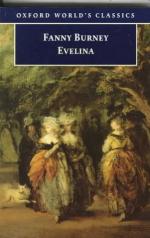
The Evelina; or, The History of a Young Lady's Entrance into the World Study Pack contains about 527 pages of study material in 17 products, including:
The English novelist and diarist Fanny Burney (1752-1840) was one of the most popular novelists of the late 18th century. She was also an important chronicler of English manners, morals, and society.F...
Read more
Frances Burney is an important British comic novelist: she is one of the first of the women writers whose names have been repeatedly alluded to in literary histories, inscribed in biographical diction...
Read more

In the following essay, Bloom dissects Evelina, evaluating its characterization, structure, and critical reception.
'This year was ushered in by a grand and most important event! At the latt...
Read more
In the following essay, Malone offers a summary of Evelina in the hopes of renewing critical interest in the novel.
The bicentennial of Fanny Burney's first and best novel is still fourteen ...
Read more
In the following essay, Severance proposes a psychoanalytical approach to Evelina that focuses on political rather than individual psychology. From this standpoint, Severance examines the relationship...
Read more
In the following essay, Dykstal's reading of Evelina is informed by Jürgen Habermas's analysis of the role of the bourgeoisie in early capitalist Europe. According to Dykstal, Eve...
Read more
In the following essay, Thompson offers a re-examination of the relationship between Evelina's literary background and the feminist aspects of the novel. Thompson maintains that Evelina must me...
Read more
In the following essay, Staves challenges those critics who find Evelina trivial and asserts that the anxiety felt by the main characters is quite real and is often induced by violence.
There is a ...
Read more
In the following essay, Olshin contends that Evelina's “obscure birth,” not her ignorance and inexperience, is the driving force of the novel. The critic also faults Burney for fa...
Read more
In the following essay, originally published in 1981, Newton demonstrates the way in which Evelina's world is ruled by the imposition of men on women, arguing that male assault and control is t...
Read more
In the following excerpt, Straub examines Burney's portrayal of female maturity in Evelina and finds that her treatment of independent, mature women depicts two opposing female fates: the ideal...
Read more
In the following essay, Fizer investigates Burney's scrutiny of paternity in Evelina, maintaining that the novel presents a crisis of the father figure because of the numerous paternal models i...
Read more
In the following essay, Cutting-Gray studies the significance of Evelina's journal and assesses her “calculated innocence and concealed experience.” The critic concludes that Evel...
Read more
In the following essay, Campbell states that Evelina includes a “model of reading” similar to conduct literature in its concern with propriety, which is intended to instruct Burney...
Read more
In the following essay, Tucker explores the epistolary nature of Evelina, concentrating specifically on the paradox of the ownership of letters.
On June 4, 1741, Alexander Pope filed suit against E...
Read more
In the following essay on Frances Burney's Evelina, Tucker discusses issues the story raises concerning intellectual property rights and personal identity.
On June 4, 1741, Alexander Pope fi...
Read more