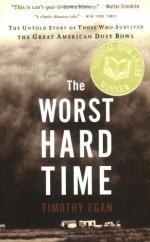
"Dust Bowl" is a term coined by a reporter for the Washington (D.C.) Evening Star to describe the effects of severe wind erosion in the Great Plains during the 1930s, caused by severe drought and lack of conservation practices. For a...
Sunday, April 14, 1935, began as a warm spring day in the western part of Oklahoma known as the Panhandle. The sun shone, birds sang, and a gentle southwest wind stirred the fields. In the small town of Guymon and in others like it, where most people...
The Dust Bowl was a series of dust storms causing major ecology and agricultural damage to American and Canadian prairie lands from 1930 to 1936,( in some areas until 1940) caused by severe drought conditions coupled with decades of extensive farming...
Byline: GRAHAM HARVEY AN UNFAMILIAR sound wakes me with a start - it's the patter of raindrops on the window pane. Barely able to suppress my excitement I jump out of bed and draw back the curtain. Rain lashes down across our...
AN UNFAMILIAR sound wakes me with a start - it's the patter of raindrops on the window pane. Barely able to suppress my excitement I jump out of bed and draw back the curtain. Rain lashes down across our valley, whipped up by...
Changing climate will mean increasing drought in the Southwest _ a region where water already is in tight supply _ according to a new study."The bottom line message for the average person and also for the states and federal government is that they'd better start...
They're old and dirty, but NASA's Mars rovers are back in the exploration business after enduring a lengthy Red Planet dust bowl that blocked most of the sunlight they need for power.With skies gradually brightening, the solar-powered rovers Spirit and Opportunity recently resumed driving and...
James N. Gregory's lecture "The Dust Bowl Migration" Poverty Stories, Race Stories went beyond the common image of the Great Depression and the Dust Bowl, and further analyzed the plights. In The Grapes of Wrath, John Steinbeck described the story of a family of Dust Bowl migrants, the Joads, who fled Oklahoma to California in search of better employment, more decent wages, and a life of pleasure.
The Dust Bowl, which took place within the Great Depression during the 1930s and is often considered the worst environmental disaster in history, took place mainly in the states of the southern Great Plains (New Mexico, Oklahoma, Texas, Kansas, and Colorado). It had a devastating effect on the American farmers throughout the decade, destroying their lands and jeopardizing their economic and social well-being and their general health.