BookRags.com Literature Guides Literature Guides Criticism/Essays Criticism/Essays Biographies Biographies My Bibliography Periodic Table U.S. Presidents Shakespeare Sonnet Shake-Up
Research Anything:        
History | Encyclopedias | Films | News | Create a Bibliography | More... Login | Register | Help
Not What You Meant?  There are 34 definitions for Hume.

Search "David Hume"


David Hume

About 593 pages (177,999 words) in 20 products

"David Hume" Search Results
Contents:
Quotations
summary from source:
David Hume Quotes
9,066 words, approx. 30 pages
David Hume ( 1711-05-07 , N.S. [April 26, O.S.] - 1776-08-25 ) was a Scottish philosopher, historian, economist and essayist. Contents 1 Sourced 1.1 A Treatise of Human Nature (1739-40) 1.1.1 Of The Understanding 1.1.2 Of the Passions 1.1.3 Of Morals...


Biography

Name: David Hume
Birth Date: April 26, 1711
Death Date: August 25, 1776
Place of Birth: Edinburgh, Scotland
Place of Death: Edinburgh, Scotland
Nationality: Scottish
Gender: Male
Occupations: philosopher

summary from source:
Biography of David Hume
1,163 words, approx. 4 pages
The Scottish philosopher David Hume developed the concept of "mitigated skepticism," which remains a viable alternative to the systems of rationalism, empiricism, and idealism. Hume raised relevant issues and arguments that remain central to...
summary from source:
Biography of David Hume
18,342 words, approx. 61 pages
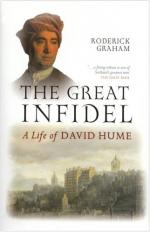
Called the "Great Infidel" by some and "le bon David" by others, David Hume was and has remained one of the most important British philosophers, essayists, and historians of the eighteenth century. Though Hume is known today in most circles for his...
summary from source:
Biography of David Hume
13,665 words, approx. 46 pages
David Hume's literary work reveals an extraordinary range of interests and a mind of unusual scope and penetration. Recognized as one of the greatest modern philosophers, he made original contributions to the major areas of philosophical inquiry:...


Encyclopedia and Summary Information
summary from source:
Hume, David Summary
1,411 words, approx. 5 pages
David Hume (1711–1776) is one of the most influential philosophers of the modern period. He was born in Edinburgh, Scotland, on April 26. His first and most important work, A Treatise of Human Nature (published in two installments in 1739 and...
summary from source:
Hume, David (1711–1776) Summary
23,256 words, approx. 78 pages
Hume, David(1711 s Political Philosophy. Princeton, NJ: Princeton University Press, 1985. Wilson, Fred. Laws and Other Worlds: A Humean Account of Laws and Counterfactuals. Dordrecht, Netherlands: D. Reidel,...
summary from source:
Hume, David Summary
2,358 words, approx. 8 pages
HUME, DAVID (1711–1776), was a Scottish philosopher and historian. Hume was born in Edinburgh on April 26, 1711, to Joseph and Katherine Home. Most of his childhood was spent on the family estate at Ninewells, in Berwickshire, forty miles south...
summary from source:
David Hume Information
10,917 words, approx. 36 pages
David Hume (April 26, 1711 – August 25, 1776)[1] was an 18th-century Scottish philosopher, economist, and historian, considered among the most important figures in the history of Western philosophy and the Scottish Enlightenment. He first gained...


News and Journals
summary from source:

Teaching History
David Hume in a nutshell
06/01/2003: 575 words, approx. 2 pages
HELP! NUTSHELL, I'M IN A FIX. MY KNOWLEDGE OF DAVID HUME IS VERY LIMITED INDEED. WHO IS HE? Ah, so already know quite a bit about him then? SORRY? Hume and the 'limits of knowing'. I thought you were just being...
summary from source:

Studies in English Literature, 1500-1900
Hume, romance, and the unruly imagination.(David Hume)(Critical essay)
06/22/2007: 7,787 words, approx. 26 pages
Jerome Christensen has observed that "[f]or Hume and his fellow men of letters the general term that subsumed 'discourse' and 'conversation' was 'correspondence,'" and that "correspondence" was so multivalent in the eighteenth century that it could signify the "empiricist ethic of sympathy" at the...
summary from source:

The New York Observer
An Epicurean Skeptic Assesses the Swan Pool of Life
5/1/2007: 548 words, approx. 2 pages
THE BLACK SWAN: THE IMPACT OF THE HIGHLY IMPROBABLEBy Nassim Nicholas Taleb Random House, 366 pages, $26.95 Nassim Taleb knows the good life: weekends in Venice, excellent wine, helicopter-flying lessons and a host of other luxuries that are easy to afford if, like him, you’re...


Criticism and Essays
Literary Criticism
summary from source:
Critical Essay by M. A. Box
38,939 words, approx. 130 pages
In the following two chapters from The Suasive Art of David Hume, Box describes Hume's stylistic development from the Treatise to the Essays. According to Box, the “journalistic character” of the latter work represents a marked improvement over the tendency of the former toward “formal treatise.”
summary from source:
Critical Essay by Donald W. Livingston
18,772 words, approx. 63 pages
In the first chapter below, Livingston explores Hume's attitudes toward religion and philosophy. In the second, he examines Hume's support of the American Revolution and his criticism of British imperial policy.
summary from source:
Critical Essay by Adam Potkay
11,894 words, approx. 40 pages
In this essay, Potkay explores Hume's ambivalence toward rhetoric and evaluates his attempt “to preserve the coalescent power of eloquence in the very act of dissolving the bonds of religion.”
 
Featured Essays
summary from source:


Essay Grade: 92%
Morally Beneficial Cities
3,033 words, approx. 10 pages
A speculative analysis of three imaginary cities built according to the ethical teachings of Plato, David Hume, and Immanuel Kant. The purpose is to evaluate which "city" would stand the test of time.
summary from source:


Essay Grade: 88%
John Locke, George Berkeley and David Hume
1,225 words, approx. 4 pages
Compares and contrasts the viewpoints of empiricist philosophers John Locke, George Berkeley and David Hume. Describes how they all have many different believes, but agree on the three anchor points: the only source of genuine knowledge is sense experience, reason is an unreliable and inadequate route to knowledge unless it is grounded in the solid bedrock of sense experience and there is no evidence of innate ideas within the mind that are known from experience.
summary from source:


Essay Grade: 86%
Determining and Differentiating Approaches to Reason
428 words, approx. 1 pages
This essay is centered upon the philosopher David Hume's work "Dialogues Concerning Natural Relgion." The essay works through Hume's appoarch to reason through the three speakers in his work. It explains the three speakers' (Cleanthes, Philo, and Demea) point of view in regard to philosophy and reason.


David Hume Study Pack

Get the complete David Hume Study Pack, which includes everything on this page. Approximately 593 pages (at 300 words per page) in 19 products.

 Please Note: Study Pack does not include any HighBeam content.

This Study Pack Contains:
4 Biographies
4 Encyclopedia Articles
6 Literature Criticism Essays
5 Student Essays
Multiple Formats Available:

· online web format
· "print-friendly" format
· downloadable PDF format
· downloadable Word/RTF format
Available Immediately Online
 

David Hume

About 593 pages (177,999 words) in 20 products


Join BookRagslearn moreJoin BookRags


About BookRags | Customer Service | Report an Error | Terms of Use | Privacy Policy