A prolific and seminal figure in underground literature, Charles Bukowski (1920-1994) is best known for poetry and fiction in which he caustically indicts bourgeois society while celebrating the despe...
Read more
The reader of Charles Bukowski's poetry can feel certain of having strong reactions. Anger? The reader does not err if he is furious at the liberties Bukowski takes with content and style. Sympathy? T...
Read more
Charles Bukowski , an internationally recognized literary figure, first published a short story, "Aftermath of a Lengthy Rejection Slip," in Story magazine in 1944, when he was twenty-four years old; ...
Read more
Charles Bukowski is recognized as an international literary figure. His first poem, "Hello!," celebrating the black driver of a horse-drawn trash wagon, was published in a mimeograph magazine called M...
Read more

In the following review of Longshot Pomes for Broke Players, critic and poet McGrath finds Bukowski's wry humor admirable, despite his reservations about the poet's style.
Here's ...
Read more
In the following essay, Kessler offers a broad survey of Bukowski's work and describes the poet as "a human being of extraordinary character, an indomitable personality who has grown in ...
Read more
In the essay below, Peters detects a "deterioration" in Bukowski's poetry, but nevertheless celebrates his originality and earthiness.
I once witnessed a Charles Bukowski first: t...
Read more
In the following review of Bukowski's first three collections, Cuscaden discusses how the poet attempts to overcome despair through his verse.
All of Bukowski's major interests and theme...
Read more
In the essay below, Swastek finds Bukowski's poetry eccentric but honest and authentic
Polish-American poetry, written in English, has had a variety of male and female voices pitched in differe...
Read more
In the review below of It Catches My Heart in Its Hands, Corrington characterizes Bukowski as a "surface" poet who "is capable of producing a poetry of pure emotion in which idea,...
Read more
In the conversation below, Bukowski discusses his literary influences, the critical response to his work, and the "Bukowski image."
[Wennersten]: What were your parents and your childhoo...
Read more
In the excerpt below, Newton notes Bukowski's equation of individualism with isolation.
Poems written before jumping out of an 8 story window is not Bukowski's best book; it is too hurri...
Read more
In the following essay, Locklin praises Bukowski's work and declares that he is "undeniably a chronicler of politically significant phenomena. "
Let me at once admit my bias: I th...
Read more
Here, Locklin claims that, in his mid-sixties, Bukowski is reaching his prime, composing narratives comparable to those of Ernest Hemingway.
I felt that Bukowski returned to top form as a poet in Dang...
Read more
In the essay below, Kessler defends Bukowski's writing from attacks by the literary establishment, arguing that his work displays "an increasingly persuasive truthfulness, a sense of hon...
Read more
In the following interview, Bukowski discusses his writing and life.
Charles Bukowski was born in Andernach, Germany. When he was two years old, his parents brought him to the United States; and he wa...
Read more
In the following review, Stade provides a plot summary of Bukowski's last novel, Pulp.
Charles Bukowski, ur-beatnik and author of more than 40 volumes of countercultural prose and verse, finish...
Read more
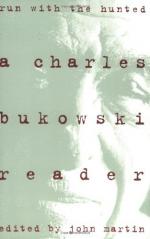
Young provides a favorable review of the Bukowski anthology Run With The Hunted: A Charles Bukowski Reader.
Any serious reader thinks they know only too well what Charles Bukowski's work will d...
Read more
In the following, Lochte summarizes and favorably reviews Pulp.
Private eye Nick Belane sits in his sleazy downtown L.A. office, alone and lonely. It's hot outside and his air conditioner is on...
Read more
In the following essay, Harrison challenges the common view of Bukowski as a chauvinist and misogynist. He illustrates his point with several selections from Post Office, Factotem, and Women, in which...
Read more
In the following essay, Peters discusses the elements of Bukowski's poetry.
I once witnessed a Charles Bukowski first: the debut of the great raunchy poet as actor. The vehicle, The Tenant, was...
Read more
Sward offers a short, favorable review, including some excerpts from the letters between Al Purdy and Bukowski.
In 1964, Canadian poet Al Purdy (author of The Stone Bird; Sex And Death; etc.) discover...
Read more
Nericcio favorably reviews Pulp, citing a poetic essence to the novel that complements and transcends the genre it emulates.
"It was a hellish hot day and the air conditioner was broken. A fly ...
Read more
In the following interview, Esterly and Bukowski discuss topics such as the author's writing, his life, his relationships with women, and other issues.
In preparation for tonight's poetr...
Read more
In the following review, Kingstone questions the wisdom of publishing the correspondence of these two authors.
The advantage of reading a writer's letters is that one sees, often quite easily, ...
Read more
In the following review, Smith discusses the humor in Bukowski's short stories.
What is the avant-garde? A cultural elite, making Advanced or High Art, but it is also a tradition of the untradi...
Read more
In the following review, Weinstein examines the similarities in Bukowski's short story collection to the fiction of Hemingway.
In no other collection of Bukowski's fiction does Ernest He...
Read more
In the following review, Dretzka reviews the collection of Bukowski's letters: Screams from the Balcony.
Hearse, Gallows, Eros, Scimitar and Song, Harlequin, Coffin, Outsider, Black Cat Review,...
Read more
In the following excerpt, Edwards offers a mixed review of Erections, Ejaculations, Exhibitions, and General Tales of Ordinary Madness.
Charles Bukowski never did escape from California. Certainly he ...
Read more
In the following essay, Harrison traces the development of Bukowski's short fiction.
I started with the short story, starving in little rooms around the country and drinking too much cheap wine...
Read more
In the following review of Erections, Ejaculations, Exhibitions, and General Tales of Ordinary Madness, Evanier addresses Bukowski's popularity and maintains that “the gutsy, audacious q...
Read more
In the following review of Life and Death in the Charity Ward, Feaver praises the humor and intensity of the stories in the collection.
In the sonsobitches school of writing you talk as you speak, but...
Read more
In the following review, Ackroyd provides a disparaging review of Life and Death in the Charity Ward.
I wish that critics would nail the ‘down and out’ routine for the lie it is; it is a...
Read more
In the following review, Harper compares Bukowski to Ernest Hemingway and asserts that the stories in Hot Water Music “are imbued with the perverse romanticism of adolescent disillusionment....
Read more
In the following negative review, Mansur underscores the superficiality of the stories in Hot Water Music.
There is a bookshop in San Francisco where some 30 feet of shelf space are designated “...
Read more
In the following negative assessment of Hot Water Music, Montrose contends that the “misfires occur far too often even by his erratic standards, the compensations too rarely and too meagrely....
Read more
In the following essay, Smith discusses the humor in Bukowski's short stories.
What is the avant-garde? A cultural elite, making Advanced or High Art, but it is also a tradition of the untradit...
Read more
In the following essay, Weinstein examines the similarities in South of No North to the fiction of Ernest Hemingway.
In no other collection of Bukowski's fiction does Ernest Hemingway's ...
Read more