A leading American journalist and playwright, Ben Hecht (1894-1964) became Hollywood's most prolific and sought-after scriptwriter of his time.Ben Hecht was born on February 28, 1894, in New York City...
Read more
Ben Hecht is perhaps best known for coauthoring the Broadway play The Front Page (1928), which established a new tradition in American stage comedy with its irreverent attitude toward established valu...
Read more
Ben Hecht, journalist, novelist, playwright, screenwriter, was one of the major figures of the Chicago Renaissance, a reporter of the Chicago scene par excellence. Born on New York's Lower East Side i...
Read more
Ben Hecht gave to the popular culture of American journalism a vaudeville-style, behind-the-front-page picture of the newspaper reporter, tinted with an absurd "cinematic" realism that made him the m...
Read more
Ben Hecht was one of the most successful screenwriters in the history of motion pictures. In a career that spanned forty years, Hecht was credited with writing the screen stories or screenplays for...
Read more
Over a career spanning nearly half a century, Ben Hecht wrote highly individual works which earned him a place in both popular culture and American literature. An outspoken, abrasive personality, he w...
Read more
Ben Hecht began his career as a writer in 1910, at the age of sixteen, when he became a reporter for the Chicago Journal. His four years at the Journal and the nine years he spent with the Chicago Da...
Read more



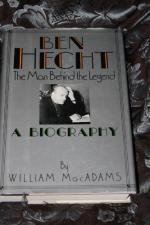
 Ben Hecht
 Ben Hecht
