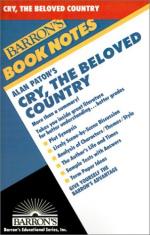
Alan Stewart Paton (1903-1988) was a South African writer and liberal leader. His novel Cry, The Beloved Country won him world acclaim for the insights it gave on South Africa's race problem.Alan Stew...
Read more
In a cathedral in Norway in 1946, Alan Paton sat looking at a rose window. "There was still enough light in the sky to see its magnificent design and colors," wrote Paton in Towards the Mountain, his ...
Read more
Alan Paton was one of South Africa's best-known novelists, as well as a reputable poet, biographer, politician, prison reformer, and thinker. Following the publication of his first novel, Cry, the Bel...
Read more

Critical Essay by Robert L. Berner
Knocking on the Door is a collection of short pieces written between 1923 and 1974 and hitherto unpublished or otherwise inaccessible. The chronological arrangement ...
Read more
In the review below, Minter outlines the major events of Paton's life covered in Journey Continued.
For four decades, Alan Paton's novel Cry, the Beloved Country has given millions their...
Read more
In the following essay, Hooper investigates the function and effects of Stephanie's "silence" in Too Late the Phalarope.
In every story there is a silence, some sight concealed, ...
Read more
In the following essay, originally printed in 1949 in The New York Times Review as regular feature interviews, Breit asks Paton about the differences between South African and American blacks, his car...
Read more
Below, Thompson explains how Too Late the Phalarope manifests universality despite the contemporary relevance of the novel's historical aspects.
Instead of entitling this essay as I have done, ...
Read more
In the following essay, Stevens examines Sophie's function and position as narrator in Too Late the Phalarope in terms of the novel's concerns with the natures of obedience and love.
On ...
Read more
In the review below, Romano celebrates the classical emphasis on human truths and values of Ah, But Your Land Is Beautiful.
Alan Paton's first novel, Cry, the Beloved Country, is one of the few...
Read more
In the following essay, Moss traces environmental, liturgical, and spiritual influences in Paton's art.
There is a country its writers do not name. Not all, or not in all works. But time after ...
Read more
Below, Watts discusses the classical, epic, psychological, and religious dimensions of Too Late the Phalarope.
The role of the White South African novelist is often assumed by outsiders to be primaril...
Read more
Critical Essay by Nadine Gordimer
In Paton's novels one hears voices. That is his method. It derives perhaps—fascinatingly—from the secret level at which the suprarational of crea...
Read more
Critical Essay by John Romano
"Ah, But Your Land Is Beautiful" shows no slackening of either [Paton's] hope or his realism. This novel is as vigorously and as exquisitely written ...
Read more
Critical Essay by Edward Callan
For some years Paton's literary reputation rested on two successful novels and a handful of short stories. But the judgment of the future may rank his biographie...
Read more
Critical Essay by Sheridan Baker
Too Late the Phalarope invites us to think of Alan Paton more simply as a novelist than as a kind of Christian plenipotentiary to South Africa. Not that Cry the Belove...
Read more
Critical Essay by John Barkham
["Tales from a Troubled Land"] is a collection of ten tales, one superb, one first-rate, the remainder of lesser quality. To begin with the best, "L...
Read more
Critical Essay by Nadine Gordimer
In terms of tragedy as the rest of the world knows it, there is a tragedy in Alan Paton's Too Late the Phalarope—the private tragedy of a man of fine in...
Read more
Critical Essay by D. D. Chambers
It is not surprising that six of the ten Tales From A Troubled Land should be set within the framework and atmosphere of a reformatory, an environment at once the refl...
Read more
Critical Essay by Edmund Fuller
Much has been published recently about the decline of tragedy, and the question has been asked whether tragedy can be written in this age. Offstage, during the discussi...
Read more
Critical Essay by Henry Hewes
Although Alan Paton has come to be known as the poet of South African race relations, his point of greatest involvement often seems to be the more universal and eternal m...
Read more
Critical Essay by Anthony Delius
"I have been a teacher all my life", says the now septuagenarian Alan Paton in his absorbing Towards the Mountain….
However, if after … muc...
Read more
Johannesburg (dpa) - Whether it's meat, fish or simply vegetable
kebabs roasting over the coals, multi-cultural South Africans love
their braai ritual.
Prepar...
Read more