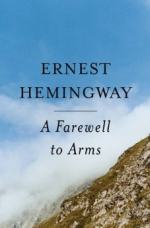
A Farewell to Arms
by Ernest Hemingway
Ernest Hemingway was born in Oak Park, Illinois, on July 21, 1899. After a brief stint as a reporter for the Kansas City Star, Hemingway joined a volunteer Am...
Read more
Biography EssayErnest Hemingway is one of the most celebrated and most controversial of American writers. He is seen variously as a sensitive and dedicated artist and as a hedonistic adventurer, as a ...
Read more
Ernest Miller Hemingway (1898-1961), American Nobel Prize-winning author, was one of the most celebrated and influential literary stylists of the 20th century.Ernest Hemingway was a legend in his own ...
Read more
Few writers have made their mark on American letters and American culture like Ernest Hemingway. Bursting on the American literary scene in 1925 with the publication of the short story collection In O...
Read more
Ernest Hemingway was twenty-two years old when he arrived in Paris in late December 1921. He had taken part in World War I as a volunteer ambulance driver, and after his experiences in Europe during t...
Read more
Ernest Hemingway is one of the most celebrated and most controversial of American writers. He is seen variously as a sensitive and dedicated artist and as a hedonistic adventurer, as a literary poseur...
Read more
"Any man's life, told truly," Ernest Hemingway wrote in Death in the Afternoon (1932), "is a novel," and he strove to lead a life "better than any picaresque novel you ever read." The mention of hi...
Read more
In the following essay, the Priestley recommends Hemingway's A Farewell to Arms to readers while expressing some reservations about its franker aspects.
Ernest Hemingway's A Farewell to ...
Read more
In the following essay,originally published in 1961, Light discusses the four ideals of service in A Farewell to Arms.
One way of looking at Ernest Hemingway's A Farewell to Arms is to see its ...
Read more
In the following essay, Schneider compares A Farewell to Arms to a lyric poem, where plot, character, and images all contribute perfectly to a feeling of hopelessness and desolation.
In a well-known e...
Read more
In the following essay, Watkins asserts that, in both theme and style, A Farewell to Arms sets up a conflict between abstract notions of patriotism and honor and the concrete world of individual choic...
Read more
In the following essay, Carson explores the ways in which A Farewell to Arms fuses a naturalistic approach with compressed, symbolic language.
Edmund Wilson proclaimed in 1931 that the ‘literar...
Read more
In the following essay, Fetterley states that the character of Catherine is a scapegoat for Frederic's hostility rather than a true object of romantic love, providing a way for Frederic to avoi...
Read more
In the following essay, Bell uses drafts and revisions of the novel to show that, while not autobiographical in every detail, A Farewell to Arms is highly realistic as a reflection of Hemingway'...
Read more
In the following essay, Merrill asserts that a work of art should not be divorced from aesthetic judgments because of an author's alleged male bias.
In the “Extra” for March 1987 ...
Read more
In the following essay, Norris uses reader-response criticism to argue that Hemingway uses the love story in the novel to turn readers' attention from the brutal realities of war.
The project o...
Read more
In the following essay, Phelan emphasizes the novel's progression in voice which allows Frederic's character to develop gradually into a manifestation of Hemingway's views of the ...
Read more
In the following essay, Stoltzfus presents a complex analysis of the use of language in A Farewell to Arms, with particular reference to the way in which Hemingway's use of metaphor and shiftin...
Read more
In the following review, originally published in 1929, Matthews outlines Hemingway's transition in A Farewell to Arms from the realism of war to the idealism of a love story.
The writings of Er...
Read more
In the following essay, Herrick raises questions about the propriety of certain frank sexual references in A Farewell to Arms, comparing them unfavorably with similarly explicit passages in Erich Mari...
Read more
In the following review, originally published in 1929, Davidson criticizes what he calls Hemingway's behaviorist, “scientific” approach to writing in A Farewell to Arms.
Ernest He...
Read more
In the following review, originally published in 1929, Hartley states that A Farewell to Arms is particularly interesting because of its account of war on the Italian front.
Mr. Hemingway is a novelis...
Read more
In this introduction, originally published in the 1932 edition of A Farewell to Arms, Ford, a novelist himself and a friend and colleague of Hemingway's from his days in Paris in the 1920s, dwe...
Read more
In the following essay, originally published in 1934, Lewis accuses Hemingway of borrowing the style of Gertrude Stein, purveying brutish speech patterns, and championing the unthinking masses, but at...
Read more
In the following essay, Warren answers critics of Hemingway and explores themes of the quasi-religious significance of human love and the solitariness of the individual in A Farewell to Arms.
The situ...
Read more
In the following essay, Hackett asserts that Hemingway's hero in the novel represents a false concept of male dignity.
In one detail time has dulled the luster of Ernest Hemingway's A Fa...
Read more
In the following essay, Nakjavani draws upon philosophy, military history, psychoanalysis, and literary theory to consider Hemingway's treatment of the metaphysics and psychology of war in A Fa...
Read more
In A Farewell to Arms, Ernest Hemingway introduces to the reader a character by the name of Frederick Henry. Henry had a goal to become a hero, and throughout the novel I feel that he proved he was....
Read more
In the first chapter of A Farewell to Arms, Ernest Hemingway uses imagery to express his negative opinion of war disrupting a peaceful setting.
The countryside setting is a picture of a peaceful an...
Read more
Rain
"You're not really afraid of the rain are you""
"Not when I'm with you."
"Why are you afraid of it""
"I don't know."
"Tell me."
"Don't make me."
"Tell me."
"No."
"Tell me."
"All right. ...
Read more
Hemingway's A Farewell to Arms, Hemingway uses different idiomatic resources, such as wordplay, satire and word jokes, to develop the actions of his main character, Fredrick Henry. The play on words p...
Read more
A Farewell to Arms by Ernest Hemingway is considered one of the great novels of World War I. It introduces the theme of love, while war occupies all of Europe. It is a complex novel with man...
Read more
At the turn of the century when discussing the subject of war there was only one Latin ideal which could come to mind: " Dulce et decorum est, pro patria mori"; it is sweet and proper to die for one'...
Read more
Rain: symbolizes death because every time rain is mentioned it is followed by death. In the beginning, the author states that when rain comes so does cholera, a deadly disease that kills. In addition,...
Read more
When writing a catching story, authors must use actions from real life in order to get the readers attention. In life, when a person does something they know they shouldn't, th...
Read more
Author Ernest Hemingway uses many different symbols in his novel A
Farewell to Arms. One of the most used symbols is nature. Nature varies
from the different seasons to weather. He uses symbo...
Read more
Courage, the state of mind that helps one overcome fear, symbolism, the revelation of intangible conditions, and change, the alteration of one's morals for better or for worse. These three subjects c...
Read more
Chapter I: In the First chapter of this novel I am a little surprised at the description of the area that the main character is in. I expected more from the author. It is described as a battle zone a...
Read more
A Farewell to Arms, such simple words with such great meaning. When we first received the novel from our English teacher I sat there and snared at him with anger about having to read another war nove...
Read more
A Farewell to Arms is a romance novel that takes place during the First World War in the year 1916. The setting plays a key role in the novel because it contains both mountains and plains. Each of ...
Read more
Rain, the seasons, and the mountains are symbols in the novel, A Farewell to Arms, that kept reappearing. Rain is symbolic of terrible events and death. In the novel it is raining when ever something ...
Read more
In this world in which everything ends and death is inevitable, it is common to search for some type of comfort. There are two main things that people rely on for this feeling of safety and happiness...
Read more
Ernest Hemingway: The Man within Each Person
Ernest Hemingway was born on July 21,1899, in Oak Park Illinois (Pratt 11). He was the second oldest child in a family of six children. Ernest's mother, G...
Read more
A Farewell to Arms Book Notes is a free study guide on A Farewell to Arms by Ernest Hemingway. Browse the summary below:
Author Biography / Context of the Work
One-Page Plot Summary
...
Read more
Teaching A Farewell to Arms
All teaching products sold separately.
A Farewell to Arms Lesson Plans contain 149 pages of teaching material, including:
Presidential candidates are seeing pieces of themselves in the books they've been reading lately.Barack Obama recently finished "Gilead," a novel about an old man's words to his 7-year-old son. The...
Read more
When faced, at the movies, with obnoxious fellow audience members who are talking or kicking the back of your chair, you have two basic options (unless, of course, their banter is better than the d...
Read more
When faced, at the movies, with obnoxious fellow audience members who are talking or kicking the back of your chair, you have two basic options (unless, of course, their banter is better than the d...
Read more
When faced, at the movies, with obnoxious fellow audience members who are talking or kicking the back of your chair, you have two basic options (unless, of course, their banter is better than the d...
Read more
The Associated Press asked seven Democrats and seven Republicans running for their party's 2008 presidential nomination a series of questions about their backgrounds, traits and tastes. Check out t...
Read more
Stuart Gordon’s Edmond, from a screenplay by David Mamet, based on his play, had been reportedly turned down by many mainstream studios before Gary Rubin’s First Independent Pictures to...
Read more
Stuart Gordon’s Edmond, from a screenplay by David Mamet, based on his play, had been reportedly turned down by many mainstream studios before Gary Rubin’s First Independent Pictures to...
Read more
Bring on the grilled meat. Just don't plate it with certain vegetables.The presidential candidates seem more aligned in their food cravings than their politics. Indulgences include a hearty Souther...
Read more
EDITOR'S NOTE — As many states rethink get-tough statutes that made it easier to send juvenile offenders to adult court and prison, Missouri's pioneering reforms are getting increasing attent...
Read more
At age 9, Korey Davis came home from school with gang writing on his arm. At 10, he jacked his first car. At 13, he and some buddies got guns, used them to relieve a man of his Jeep, and later, whi...
Read more